ServicesStamped Concrete
Stamped Concrete in Fountain Valley
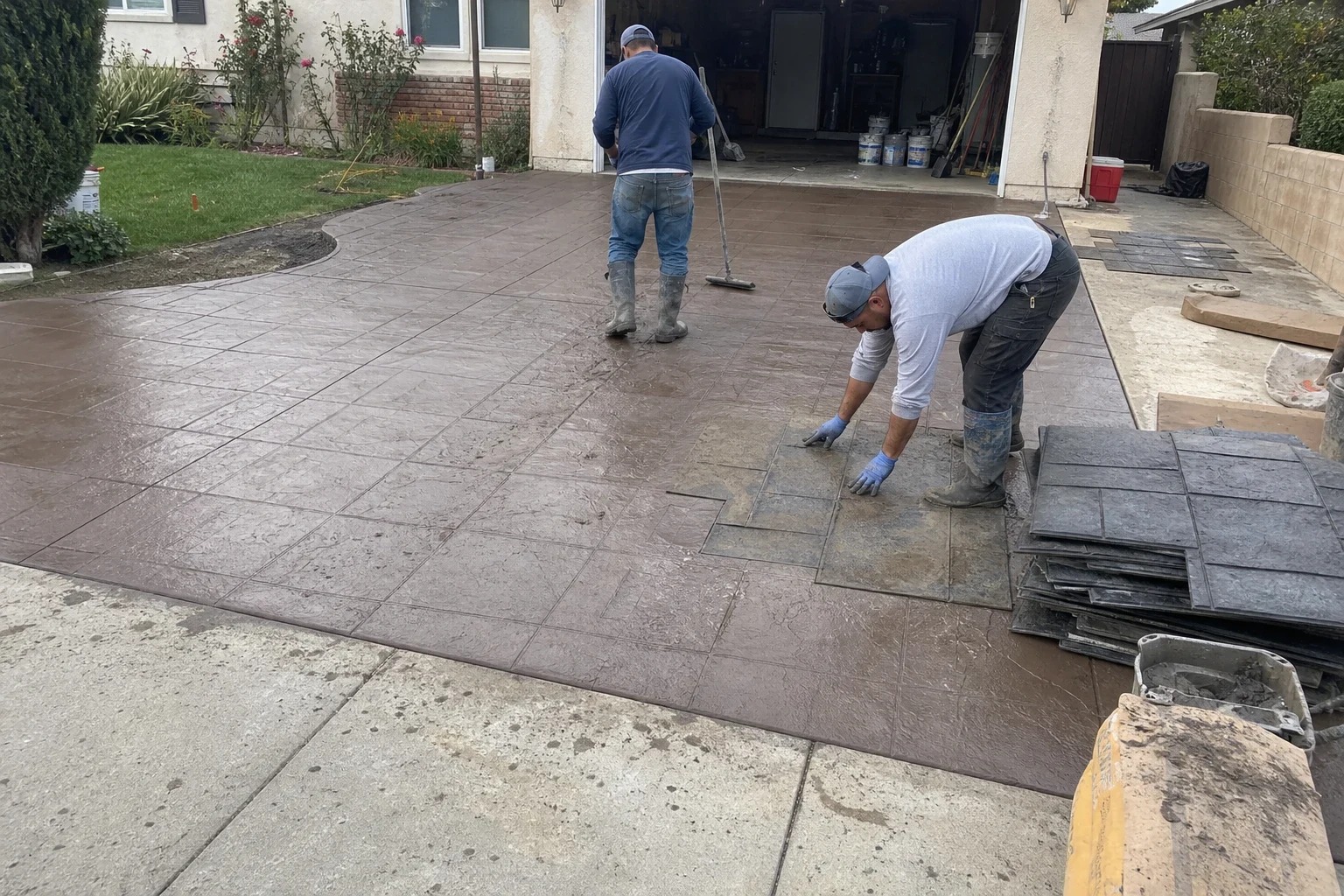
We pour, color and stamp concrete that looks like slate, flagstone or brick, then seal it with a slip-resistant additive so the surface stays safe under bare feet and wet shoes. You get a decorative slab built on a properly prepared base, with clean edges.
What Stamped Concrete Is and When It Makes Sense
Stamped concrete is a standard slab that we texture while it is still plastic. After the pour and screed, we add color, broadcast a release agent, then press polyurethane stamping mats into the surface to imprint the pattern. The release agent keeps the mats from sticking and leaves a secondary tone in the low spots, which is what gives the finish depth.
It is a good fit when you want the look of pavers or natural stone without hundreds of individual joints for weeds and ants to work into. It suits patios, courtyards, pool surrounds and front walks. It is a poor fit for a slab that has to stay perfectly flat for rolling equipment, since deep textures can catch casters and narrow wheels.
Safety drives several choices we make on every job. Deeper stone textures can create small ridges that catch a toe, so we steer high-traffic paths toward flatter patterns. We also mix a fine anti-slip grit into the final sealer coat, because a glossy sealed surface gets slick when wet.
What Our Stamped Concrete Work Includes
- Excavation and base compaction
- We excavate to the planned depth, strip out organic topsoil and compact a gravel base in thin lifts. A lot of soil in the area is expansive clay that swells when wet and shrinks as it dries, so a dense, even base is what keeps the slab from settling in patches.
- Forms, reinforcement and slope
- We set the forms with a gentle fall away from your home so runoff drains off rather than collecting along the foundation. Rebar goes on plastic chairs or concrete blocks, which hold the steel up near mid-depth where it can actually hold the slab together if it cracks.
- Color method matched to the job
- Depending on the look you want, we use integral color mixed through the whole load, a broadcast color hardener for richer surface tones, or the two together. With integral color, a chipped edge shows the same hue underneath instead of plain gray.
- Pattern stamping and detailing
- We lay the mats in sequence once the concrete reaches the right firmness. Along edges and in corners where full-size mats will not fit, we use flexible texture skins and hand tools so the pattern runs cleanly to the forms.
- Control joints placed in the pattern
- Concrete shrinks while it cures and will crack wherever it wants unless a joint gives it a place to go. We saw-cut control joints along the grout lines of the pattern so they blend into the design.
- Slip-resistant sealing
- Once the release agent is washed away and the slab has dried, we roll on an acrylic sealer with an anti-slip additive. The sealer shields the color from UV and stains, and the grit adds traction for shoes and bare feet.
Signs Stamped Concrete Is the Right Choice
Plain concrete that is due for replacement
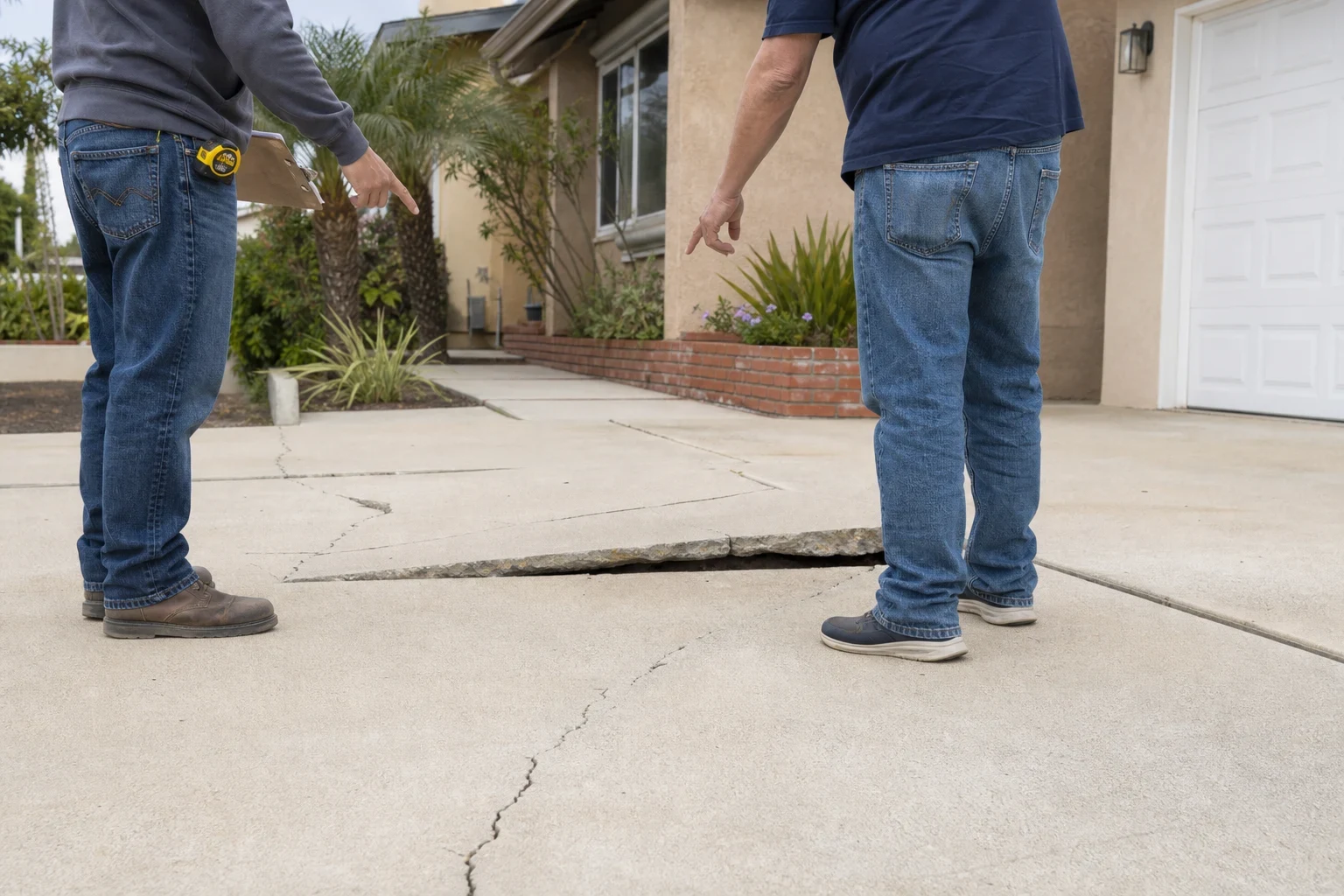
If your existing slab is heaved, broken into sections or sloping toward the house, a new pour is the time to add pattern and color for little extra disruption.
Pavers that shift and trip people
Individual pavers can sink or lift over time, leaving raised edges. A stamped slab gives a similar look as one continuous surface with no loose units.
Weeds and ants in the joints
Sand joints between pavers or flagstone give weeds a foothold. Stamped concrete has only a few sealed control joints.
A patio that gets slick when wet
Smooth troweled concrete near sprinklers or a hose bib can be slippery. A textured, grit-sealed surface gives better footing.
You want stone looks within a concrete budget
Cut slate and natural flagstone involve more labor per square foot. Stamping gets close to that appearance on a single pour.
How a Stamped Concrete Job Runs
- 1
On-site look and pattern choice
We measure the area, check drainage and access, and show you pattern and color samples. You get a written estimate that lists base prep, reinforcement, color and sealer as separate lines.
- 2
Prep day
We excavate, compact the base, set forms and place rebar. We mark off the work area so children and pets stay clear of open trenches and stakes.
- 3
Pour and stamp day
The concrete is placed, screeded and floated, then colored and stamped while it is workable. Timing matters here, so we bring enough crew to stamp the whole slab before it sets too far.
- 4
Cutting, cleaning and sealing
Within a day or so we saw-cut control joints. A few days later we pressure-wash off the release agent and apply the slip-resistant sealer once the surface is dry.
- 5
Cure time and walkthrough
Plan on light foot traffic after about a day and vehicles after roughly a week, depending on mix and weather. We walk the finished slab with you and explain how to keep the sealer in good shape.
What Affects the Cost of Stamped Concrete
Stamped work costs more than a plain broom finish because it adds color, release agent, extra crew on pour day and a sealer step. The final number depends mostly on your site and your design choices. We price each line separately so you can see where the money goes.
- Area and shape
- Larger slabs spread setup costs, while curves, tight corners and steps add hand-detailing time.
- Pattern and color layers
- A single color with one stamp pattern is the simplest. Borders, multiple colors, antiquing release and hand-applied accents add labor and material.
- Demolition and base condition
- Breaking out and hauling an old slab, or correcting soft soil and poor drainage, adds work before any concrete arrives.
- Access for the truck
- If the mixer cannot reach the forms, we pump the concrete or move it by wheelbarrow, which changes the equipment and crew needed.
- Permits and setbacks
- Some projects near property lines or tied to drainage need a city permit or plan review, which affects scheduling and fees.
Stamped Concrete Questions
Something not covered here? (714) 617-7914
Is stamped concrete slippery?
Sealed stamped concrete can be slick when wet if the sealer goes on without grit. We add an anti-slip additive to the final coat on every job. Around pools and entries we also favor textures with more grip and fewer high ridges.
Will stamped concrete crack?
All concrete shrinks as it cures, and some hairline cracking is normal. Proper base compaction, rebar and correctly spaced control joints keep cracks where we plan them. Placing joints along pattern lines also makes them far less noticeable.
How often does it need resealing?
Most stamped surfaces need a fresh sealer coat every two to three years, sooner in full afternoon sun or heavy foot traffic. Resealing restores color depth and keeps the slip-resistant grit in place. When the surface starts to look dull or water stops beading, it is time.
Can you match my house or existing hardscape?
We can get close using integral color, hardener and release colors together, and we will make a sample for you to compare. Concrete color varies slightly with the mix and curing conditions, so an exact match to an older slab is not something any contractor can promise.
Can stamped concrete be used on a driveway?
Yes, with a thicker section and reinforcement sized for vehicle loads. We usually suggest a flatter texture where tires turn, since deep grooves wear the sealer faster. Our Driveways page covers the structural side in more detail.
What should I keep off the new slab?
Keep foot traffic off for about a day and cars off for about a week. Avoid de-icing salts and harsh cleaners, and lift heavy planters rather than dragging them across the sealer.
Plan a Stamped Surface That Is Safe to Walk On
Tell us where the slab goes, how it gets used and the look you have in mind. We will talk through patterns, color options and slip resistance, then set a time to see the site.