ServicesRV Parking Pads
Concrete RV Parking Pads in Fountain Valley
We build RV parking pads thick enough for a loaded motorhome or trailer, reinforced with steel and set on compacted base. You get a level, drained spot to park, set jacks and step out, with a job site that stays safe for your family while we work.
A Slab Sized for the Weight You Actually Park
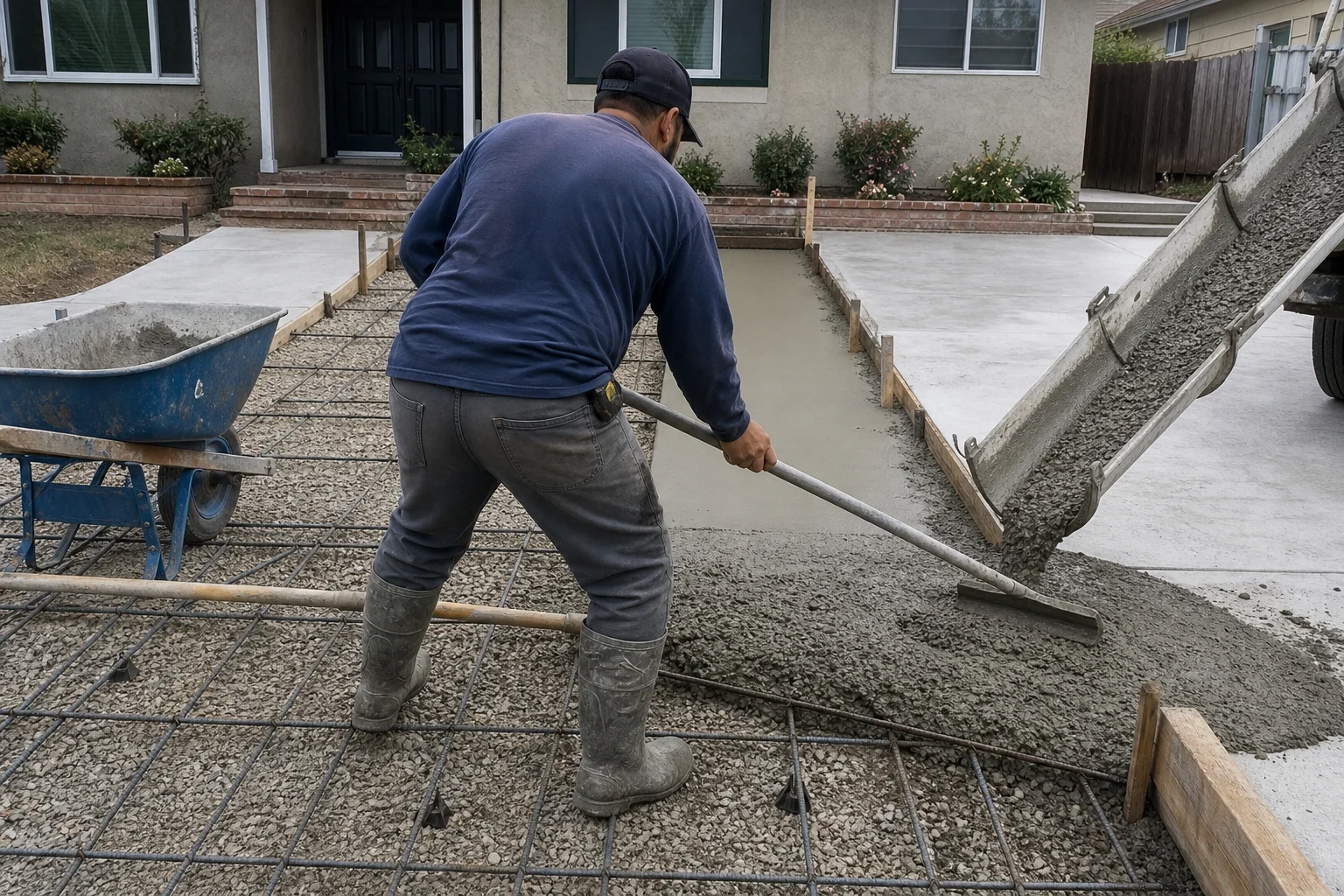
A Class A motorhome or a loaded fifth-wheel puts far more weight on each tire than a car does. A typical 4-inch driveway slab was never designed for that, so it cracks at the corners and settles where the wheels sit. We pour RV pads thicker, usually 5 to 6 inches, with rebar tied in a grid and a compacted aggregate base underneath to spread the load into the soil.
Much of our work here goes in a side yard or alongside an existing driveway, where access is tight and the RV has to swing in cleanly. We lay out the pad around your rig's length, its turning path and where the stabilizer jacks will land, so the finished slab is something you can park on without guessing.
What Goes Into Every RV Pad We Pour
- Utility locating before digging
- We have underground lines marked through 811 before excavation and check for sprinkler and drain lines ourselves. Hitting a gas or electric line is the biggest hazard on a dig like this, so we treat it as step one.
- Excavation and subgrade compaction
- We remove sod and soft soil, then compact the subgrade with a plate compactor. Loose soil under a heavy slab is what causes settling at the wheel tracks.
- Aggregate base and steel reinforcement
- Crushed aggregate base goes down next and is compacted in place. The rebar grid is tied and then lifted on small supports to mid-depth, because steel only holds cracks tight when concrete surrounds it on all sides. Bars left lying on the base do very little.
- Slope for drainage
- We grade the pad with a slight fall away from your home and toward the street or a drain path. Water that pools under an RV rusts the undercarriage and softens the soil at the slab edge.
- Control joints and finish
- Joints are cut or tooled to about a quarter of the slab depth so shrinkage cracks follow a straight line. We finish the surface with a broom texture for grip when it is wet.
- Cleanup and curing guidance
- We haul off the spoils and forms, wash down your driveway, and tell you exactly when it is safe to walk, drive and park the RV.
Signs It Is Time for a Proper RV Pad
Tires sinking into grass or dirt
Ruts and a leaning rig mean the soil cannot carry the load. Parking on soft ground also makes leveling jacks dig in and shift.
Gravel that keeps spreading
Loose gravel migrates, tracks into the street and leaves low spots where the wheels sit. It also gives poor footing when you step out of the coach.
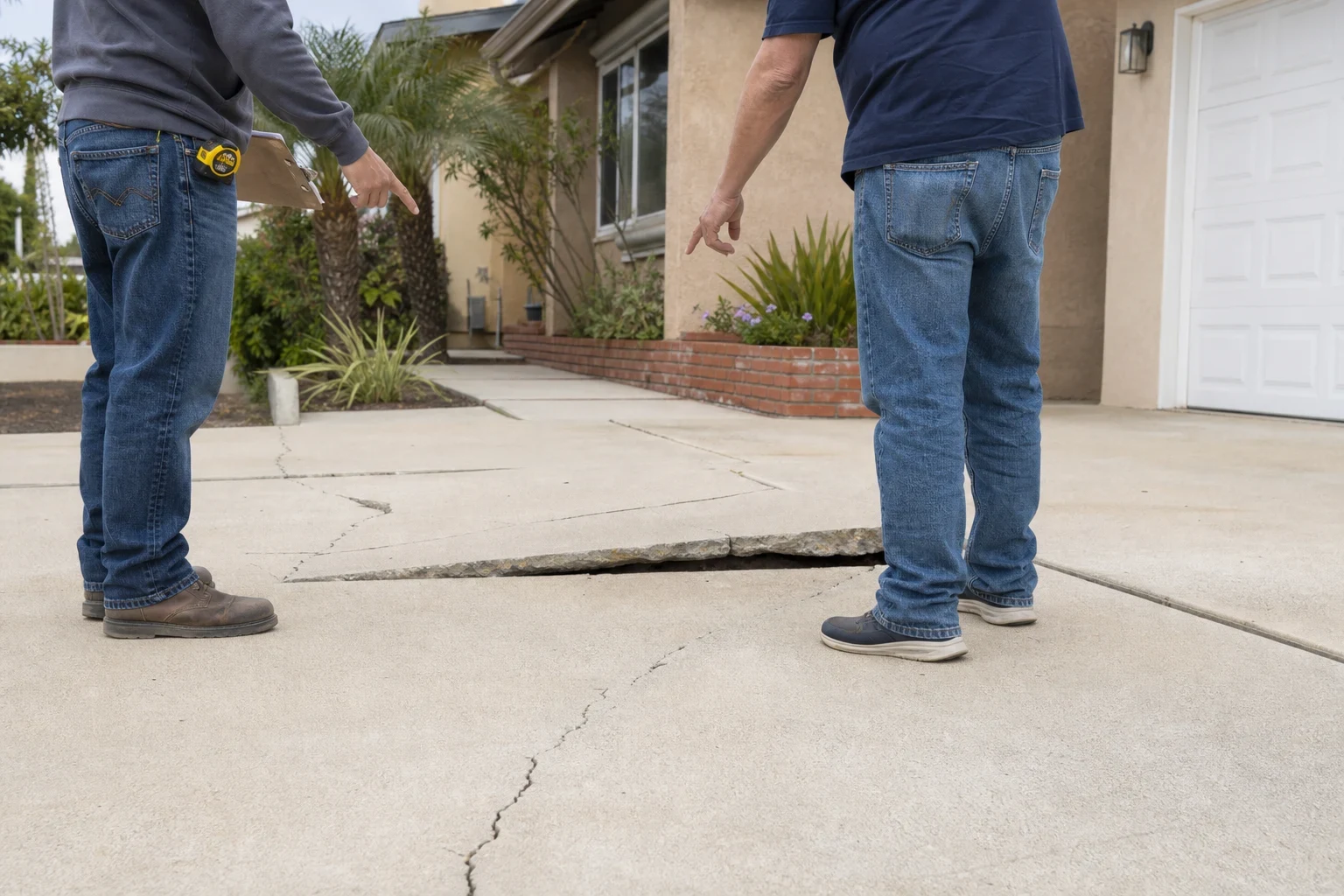
Cracks where the RV sits on the driveway
Corner breaks and sunken sections under the wheels show the existing slab is too thin for the weight.
Water standing around the RV
Puddles after rain or irrigation point to a surface with no planned slope, which keeps the frame damp.
Blocks stacked to get level
A tall stack of leveling blocks on uneven ground is unstable. A flat, true slab cuts that down to a block or two.
How the Work Runs, Start to Finish
- 1
Site visit and layout
We measure your RV, the gate or approach it comes through, and the turning room. We check soil, slope and any existing concrete, then explain thickness, reinforcement and drainage in a written estimate.
- 2
Permits and utility marks
If the project needs a wider driveway approach or curb cut, that work in the public right-of-way usually needs a city permit, and we pull it. Utility lines are marked before any digging.
- 3
Demolition and base prep
Old concrete is saw-cut with water to keep silica dust down, broken out and hauled away. We fence off the work area so kids and pets stay clear of the open excavation and equipment.
- 4
Forming, steel and the pour
Forms are set to grade, rebar is tied and inspected, and the concrete truck is positioned so it never crosses lawn, curbs or lines it could damage. We place, screed, float and broom the slab the same day.
- 5
Curing and handoff
The slab is kept moist while it cures. Foot traffic is usually fine after a day, a car after about a week, and we recommend waiting closer to a month before parking a heavy RV on it.
What Moves the Price of an RV Pad
Every pad is priced from its own measurements and site. The biggest drivers are how much concrete and steel the load calls for and how much work it takes to get the ground ready. We go through each line on the estimate with you by phone or on site so nothing comes as a surprise later.
- Size and thickness
- A pad for a 40-foot motorhome uses far more concrete than one for a small trailer, and going from 5 to 6 inches thick adds volume across the whole slab.
- Removal and site prep
- Breaking out an old slab, removing roots or bringing in extra base for soft soil all add labor and haul-off.
- Access
- A narrow side yard may mean pumping concrete or moving it by wheelbarrow instead of chuting straight from the truck.
- Approach and permit work
- Widening a driveway approach or cutting a curb adds city permit fees and extra concrete work at the street.
- Extras
- Thickened edges, a conduit sleeve under the slab for future power, or a finish that matches your existing driveway each change the scope.
RV Parking Pad Questions
Something not covered here? (714) 617-7914
How thick should a concrete RV pad be?
For most motorhomes and fifth-wheels we pour 5 to 6 inches with rebar reinforcement. Lighter travel trailers can sometimes go a bit thinner. We base the recommendation on your rig's weight and the soil we find during the visit.
How long before I can park my RV on the new slab?
Concrete keeps gaining strength for about 28 days. Cars are usually fine after a week, but we suggest waiting close to the full month for a heavy RV, especially where the jacks or stabilizers will set down.
Can you build the pad in my side yard?
Often, yes. We check the gate width, the clearance past the eaves and fence, and whether the RV can make the turn. If the access is tight we plan the pour around a pump or smaller loads.
Will the pad crack?
Concrete gives up a little volume as its water dries out, so fine surface lines show up on nearly every slab and are not a defect. What matters is where they go and whether the pieces stay put. Control joints, a compacted base and rebar held at the right depth steer that movement into straight lines and keep sections from pulling apart or dropping.
Should I put pads under my leveling jacks?
Yes. Jack feet concentrate a lot of weight on a small area. A wide jack pad spreads that load and protects the surface, even on a well-built slab.
Can the pad tie into my existing driveway?
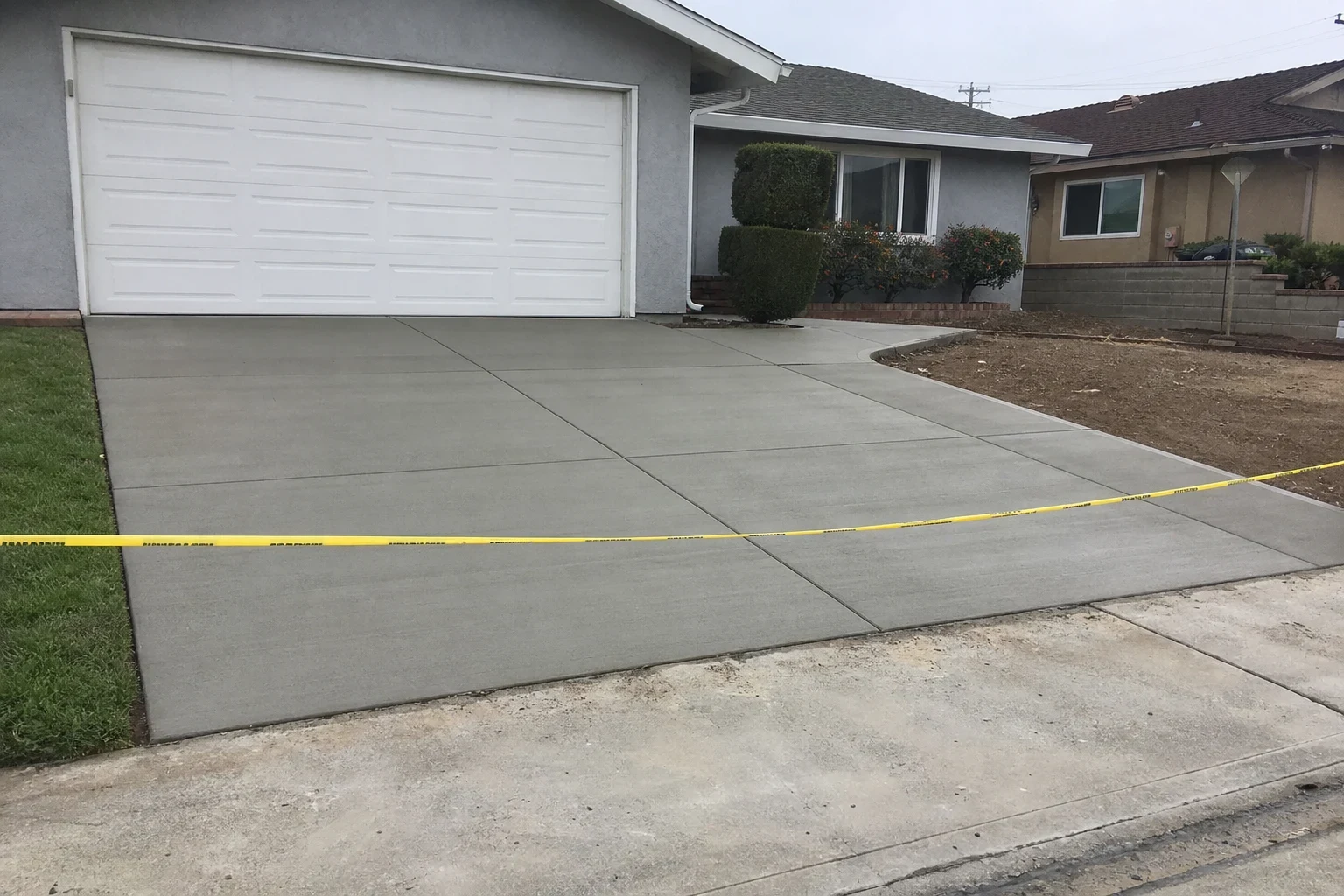
We can pour it alongside your driveway and dowel the two slabs together so they stay level at the seam. If you also want the driveway itself redone, our driveways page covers that work.
Get Your RV Off the Grass and Onto Solid Ground
Tell us your rig's length and where you want to park it. We will talk through thickness, access and drainage, then set a time to measure your site in Fountain Valley or a nearby town like Huntington Beach.