ServicesConcrete Backyards
Concrete Backyards in Fountain Valley
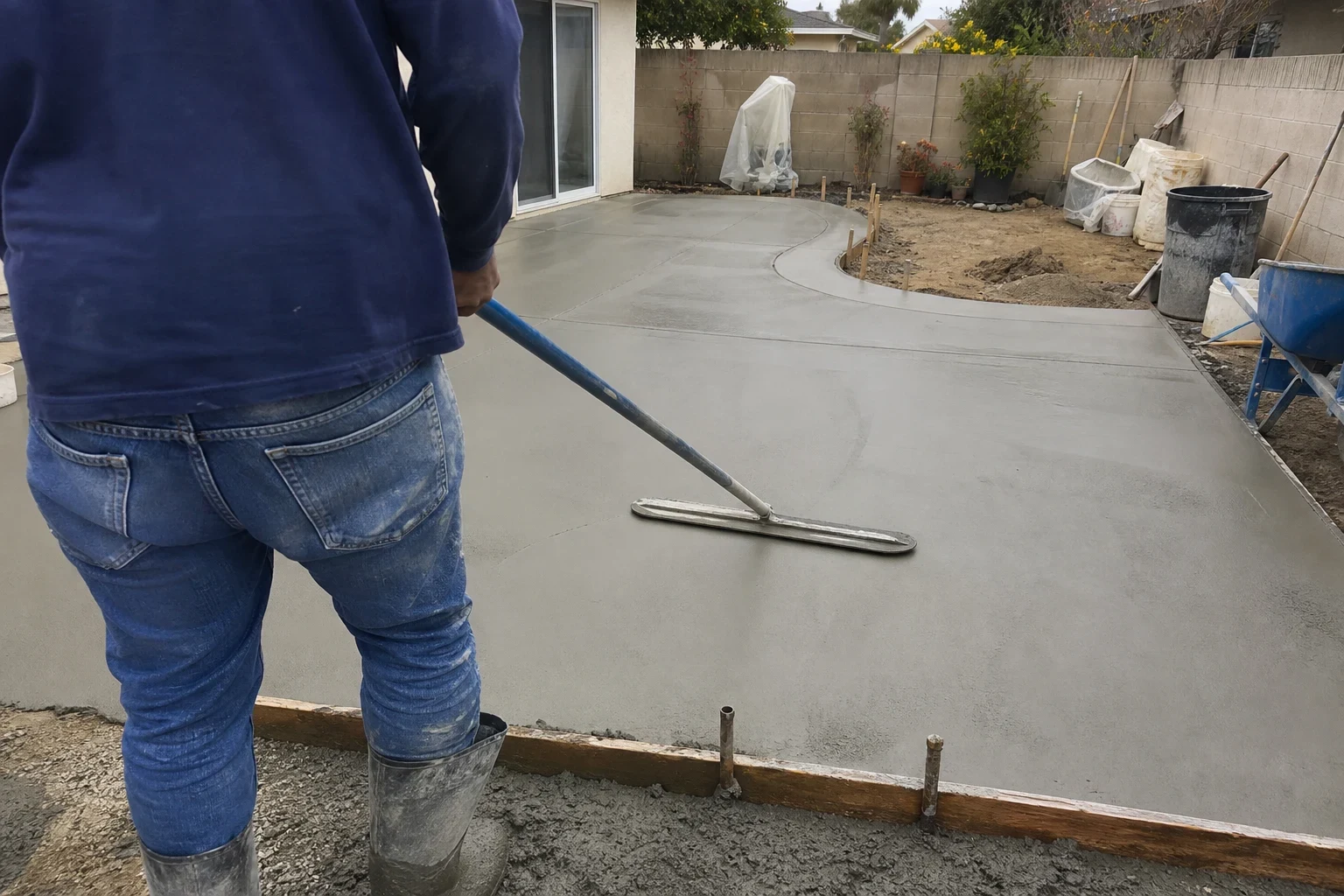
We plan and pour backyard concrete that sheds water away from your home, holds up under daily use and keeps a good grip when wet. The job site stays fenced and organized from demolition to the last cure day, so your family can move around the house safely.
A backyard slab built for how your family uses it
A concrete backyard is more than a large patio. It covers most of the yard, so it decides where rainwater goes, where the kids ride bikes and where the grill and table sit. Get the slope or the joints wrong over that much area and you live with puddles, trip edges and random cracks for decades.
We start with the parts nobody sees: utility locates, a compacted aggregate base, steel reinforcement and a grade that falls about a quarter inch per foot away from your foundation. The finish comes last, and we choose it for footing as much as looks.
Safe work matters on a job this size. Breaking out old concrete, moving a pump line and handling wet cement all happen steps from your back door. We fence the area, keep the path to your car clear and tell you each morning what is happening that day.
What the work includes
- Utility locates before digging
- We call 811 so gas, electric and water lines are marked before excavation. We also find sprinkler lines and any gas stub for a barbecue or fire pit by hand, so nothing gets cut by a machine.
- Demolition and haul-off
- Old concrete, pavers or turf are broken out and removed. We keep debris inside the fenced work zone and sweep the access path at the end of each day.
- Grading and compacted base
- The soil is cut to grade and topped with about four inches of aggregate base, compacted in lifts. Many yards here sit on clay that swells when wet, and a well-compacted base keeps that movement from pushing the slab unevenly.
- Rebar and forms
- Steel is propped up on supports before the pour so it ends up near mid-depth, where it can hold cracks tight. Rebar left lying on the soil gets buried at the bottom and does little. Forms are staked firmly to hold the slope we measured.
- Drainage built into the layout
- Where the yard needs it, we place area drains and connect them to an outlet before the pour. Water should leave the yard, not sit against your stucco or under a patio cover.
- Joints and a slip-resistant finish
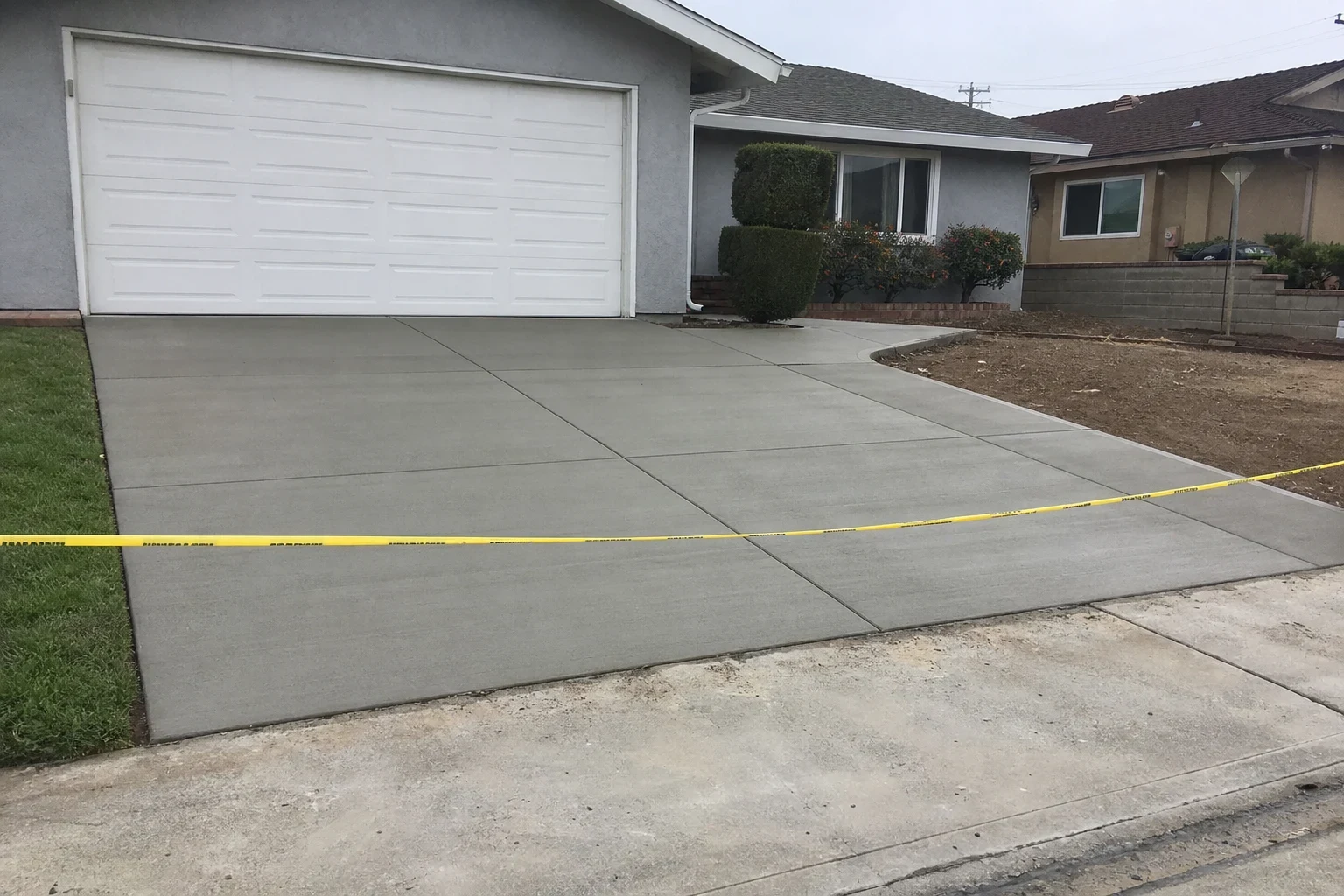
- Control joints go in at roughly eight to ten foot spacing so shrinkage cracks follow a straight line. A broom finish gives bare feet and wet shoes something to grip; a stamped or exposed finish is an option too.
Signs it is time for new backyard concrete
Water pools near the house
If rain collects against your foundation or a patio slopes toward the back door, the grade is wrong. That water can work into walls and under slabs over time.
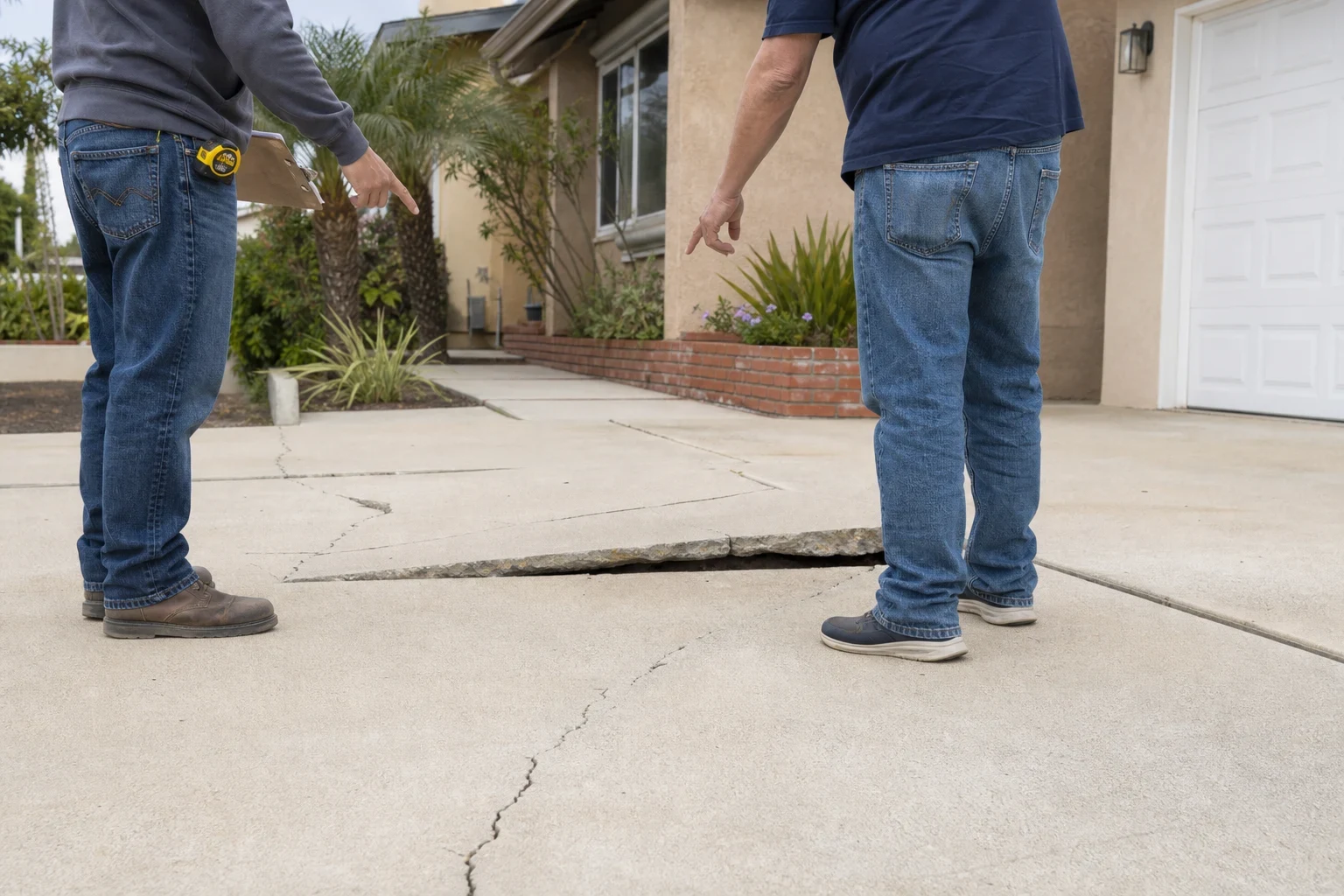
Raised edges and trip points
Slabs that have lifted or dropped at a joint create ledges that catch toes and stroller wheels. Tree roots and expansive soil are the usual causes.
Wide, spreading cracks
Hairline shrinkage cracks are normal. Cracks you can fit a coin into, or that keep widening each season, point to a base or reinforcement problem under the old slab.
Dirt and turf that stay muddy
A yard that turns to mud after every winter rain tracks dirt indoors and gives kids a slick place to play. A sloped slab with drains solves both problems.
How a backyard pour runs
- 1
Measure and plan on site
We walk the yard, take elevations at the house and the property line and mark where water should exit. Then we put the scope and pricing in writing, broken out stage by stage, so you can see what demolition, base, steel and finish each cost.
- 2
Prep and safety setup
We put up temporary fencing, protect windows and doors facing the work and lay out a clear path to the gate. Demolition, grading, base, drains, rebar and forms follow over the next days.
- 3
Pour and finish
Concrete is placed, screeded to the slope and finished once bleed water is gone. Crews wear gloves and boots because wet cement is caustic, and we ask that kids and pets stay inside during the pour.
- 4
Cure and handoff
Joints are cut and the slab is kept damp or sealed with curing compound. We remove forms and fencing, clean up and tell you when the slab is ready for feet, furniture and vehicles.
What moves the price of a concrete backyard
Square footage is the starting point, but on a whole backyard, prep and access often matter as much. We price each part separately so you can see where the money goes and decide which options are worth it.
- Removal of what is there now
- Breaking out an old thick slab costs more than stripping turf. Haul-off is charged by volume and weight.
- Access to the backyard
- A wide gate lets a bobcat and a concrete truck chute in. A narrow side yard means a pump and wheelbarrows, which adds labor.
- Drainage and grade changes
- Area drains, outlet lines and large cuts or fills to correct a backward slope all add material and time.
- Finish and decorative work
- A broom finish is the simplest. Stamped patterns, color and borders take more crew hours and materials.
- Thickness and reinforcement
- Areas that will carry a spa, a heavy outdoor kitchen or a vehicle need a thicker section and more steel.
Backyard concrete questions
Something not covered here? (714) 617-7914
How soon can we walk on the new slab?
Light foot traffic is usually fine after a day or two. Patio furniture can go on after about a week. Concrete keeps gaining strength for roughly 28 days, so we hold off on anything heavy until then.
Will the concrete crack?
All concrete shrinks as it cures, so some cracking is expected. Control joints, a compacted base and rebar keep those cracks thin and straight along the joint lines instead of wandering across the slab.
Is it safe for my kids and dog while you work?
The work area is fenced off from the first day. Wet concrete can burn skin and paws, so on pour day we ask that kids and pets stay indoors, and we keep tools and debris inside the fence each evening.
Can you pour around a patio cover, trees or a planter?
Yes. We form around posts and leave planting areas open. Near trees we discuss root paths first, because roots under a slab are a common cause of lifting later.
Do I need a permit?
Flat backyard concrete often does not need one, but drainage tie-ins or structural elements can. We check the scope against city requirements and pull the permit when one is needed.
Can part of the yard be stamped or tie into the pool?
It can. Many owners use a broom finish for the main area and our stamped concrete for a seating spot. For pool surrounds, see our concrete pool decks page; for narrow runs beside the house, see concrete side yards.
Talk through your backyard layout
Tell us how you use the yard and where water goes now. We will explain the slope, base and finish we would use, and you can get your quote by phone.