ServicesConcrete Side Yards
Concrete Side Yards in Fountain Valley
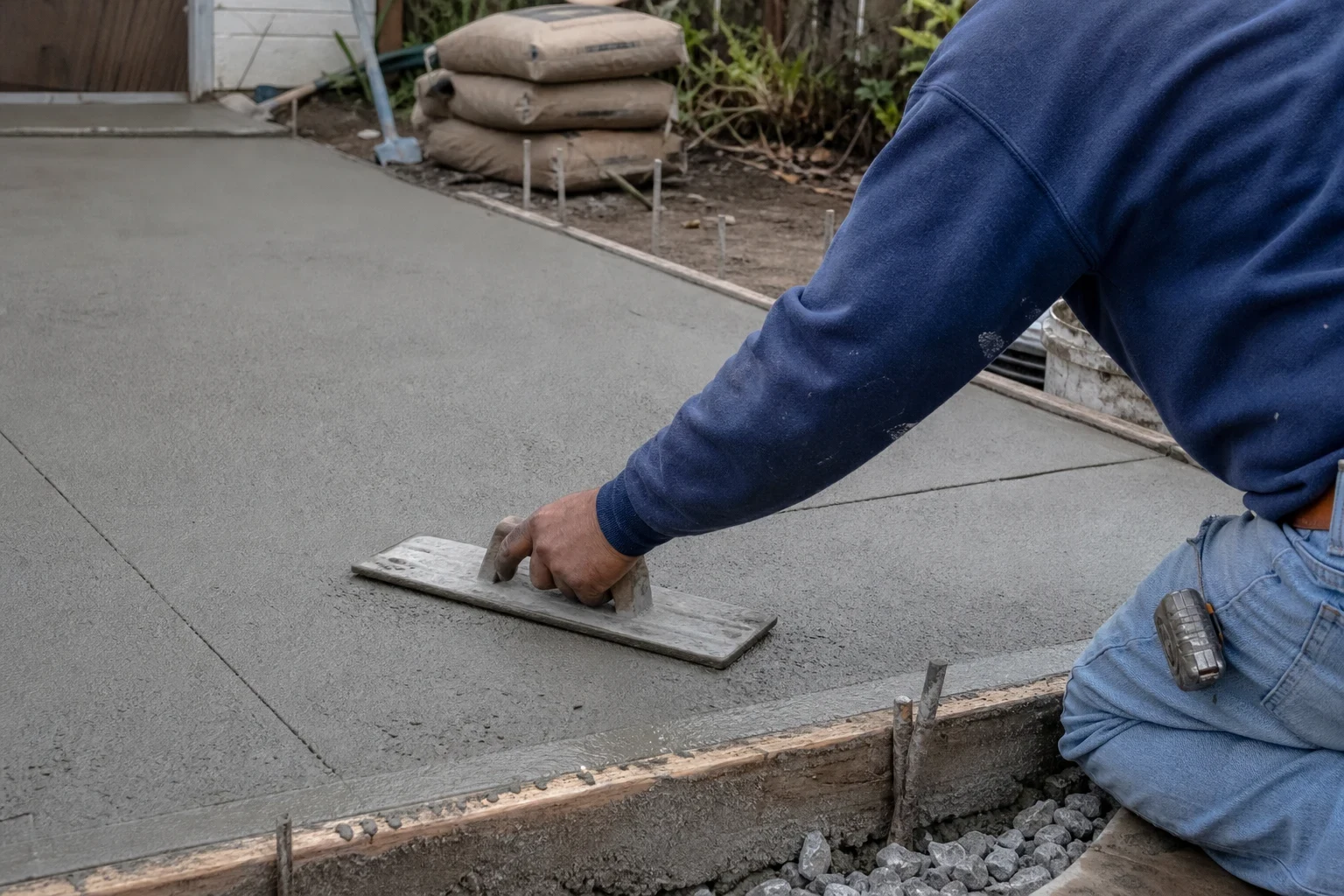
A side yard is a narrow working path that carries trash cans, hoses and rainwater. We pour it with a measured slope away from your foundation, a broom finish that grips when wet, and meters, cleanouts and drains left reachable.
What a concrete side yard fixes
Most side yards are the strip between the house wall and the property line, often four to eight feet wide. Left as dirt, gravel or loose pavers, they turn soft after rain, hold water against the stucco and give you an uneven surface exactly where you roll heavy bins and carry tools.
A properly built slab changes three things at once. It sheds water toward a drain or the street instead of toward your footing. It gives you a flat, continuous surface with no lips to catch a wheel or a toe. And it keeps the ground near your foundation drier, which matters on the clay and silty soils common across the area.
We treat the side yard as a safety and drainage job first and a finish job second. If you want a decorative surface, we can match the look of stamped concrete or your existing patios, but the grade comes before the pattern.
What the work includes
- 01
Utility locating before any digging
We call DigAlert ahead of excavation so gas, electric and water lines are marked on the ground. Service lines tend to run right through side yards, so we never skip this.
- 02
Excavation and a compacted base
Sod, gravel or old pavers come out, we cut down to depth and compact a crushed aggregate base. That firm layer keeps a long, narrow slab from dropping at one end or sagging in the middle.
- 03
Grade that falls away from the wall
Forms are set so the surface drops away from your house, usually about a quarter inch per foot, carrying water to an area drain, a channel drain or the front of the lot.
- 04
Finished height under the weep screed
The metal strip at the base of a stucco wall, called a weep screed, is where trapped moisture exits. We hold the top of the slab lower than that strip, which leaves the exit path open and respects the code clearance.
- 05
Reinforcement and joints
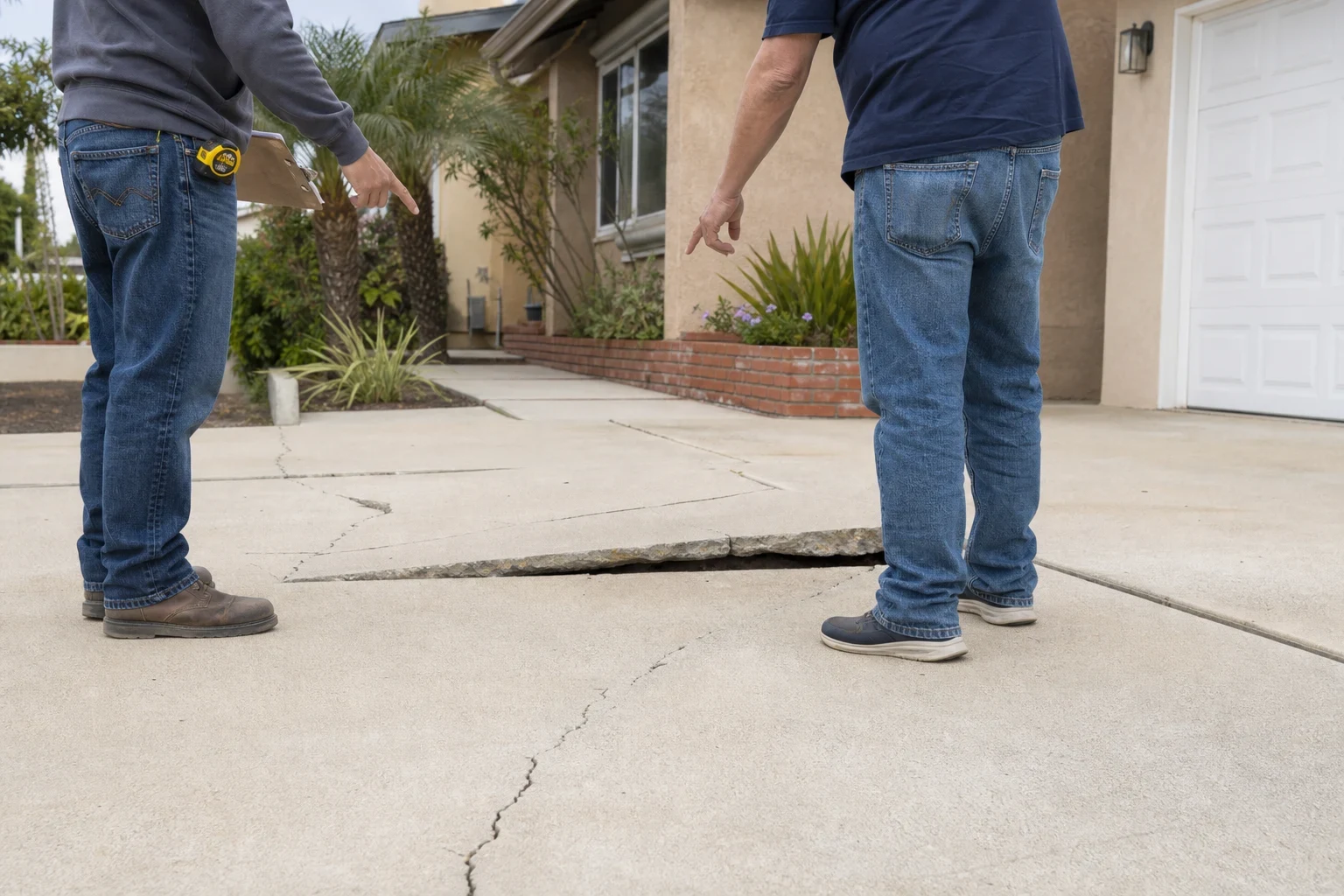
Rebar or wire mesh goes into the pour. Control joints are cut close together so any cracking follows a straight, planned line rather than wandering across the strip, and an expansion joint isolates the slab from the foundation.
- 06
Slip-resistant finish and cleanup
A broom texture is our default unless you pick another finish. Once the concrete sets, we pull the forms and haul off the excavated soil and debris.
Questions about Concrete Side Yards?
Call(714) 617-7914Signs your side yard needs concrete
Puddles against the wall
Water that sits along the house after rain is soaking the soil at your footing. A sloped slab moves it out.
Pavers that rock or sink
Loose pavers create edges that catch bin wheels and feet. Once the sand bed washes out, they keep shifting.
Mud tracked through the gate
If the path is unusable for days after a winter storm, it is not doing its job as a working route.
Stains or efflorescence on the stucco
White mineral deposits or dark staining low on the wall often point to soil or gravel piled too high against it.
Tripping spots near the AC or meter
Uneven ground around equipment is where people step without looking. A level pad there is a simple fix.
How the job runs
- 1
Site walk and measurements
We measure the run, check where water goes now and note the AC condenser, gas meter, hose bibs and sewer cleanout. You get a written estimate by line item.
- 2
Marking, demolition and base
After utilities are marked, we excavate, set forms to grade and compact the base. Any drains are set at this stage so they tie in at the right height.
- 3
Pour day
Because a mixer truck rarely fits beside the house, we usually place concrete with a line pump or wheelbarrows. We keep the gate path clear and ask that kids and pets stay inside, since wet concrete is caustic on skin.
- 4
Finishing and curing
We finish, cut joints and leave the slab to cure. Light foot traffic is usually fine after a day or two; rolling heavy bins should wait about a week.
What moves the price
A side yard is usually small in square footage but slow to build because of access. The price comes down to how much material has to be removed and placed by hand, and how much drainage work the lot needs.
- Length, width and depth
- Total square footage and slab thickness set the concrete volume and the base material.
- Access and placement method
- A narrow path with a gate often means a pump or hand placement, which adds labor and equipment time.
- What comes out first
- Removing old pavers, broken concrete or deep gravel adds demolition and haul-away.
- Drainage additions
- Area drains, channel drains and pipe runs to the street add materials and digging.
- Finish choice
- A broom finish is the most direct option. Stamped or colored surfaces add steps and time.
Side yard questions
Will concrete push water toward my foundation?
Not if the grade is right. We pitch the surface away from the wall and give the runoff a destination, either a drain or the front of the lot. An expansion joint along the house also means the slab never rests on or presses against your footing.
Can the slab go around my AC condenser and gas meter?
It can. Our forms wrap around both pieces of equipment with enough open space for a utility worker to reach the meter, and the condenser ends up sitting level. If your current AC pad is cracked or leaning, we can include a new pad in the same pour.
What happens to my sewer cleanout?
It stays reachable. We set the cleanout so its cap sits flush with the finished surface, which lets a plumber open it later without breaking out any concrete.
How much of my stucco will the concrete cover?
Very little. The top of the slab stays beneath the weep screed, so moisture that gets behind the stucco still has a way out and the wall framing stays drier.
Do I need to be home on pour day?
You do not have to stay all day. We do need the gate unlocked and the path cleared of bins, hoses and planters before the crew arrives. Keep people and pets off the fresh slab until we let you know it is ready to walk on.
Get a side yard that drains and stays level
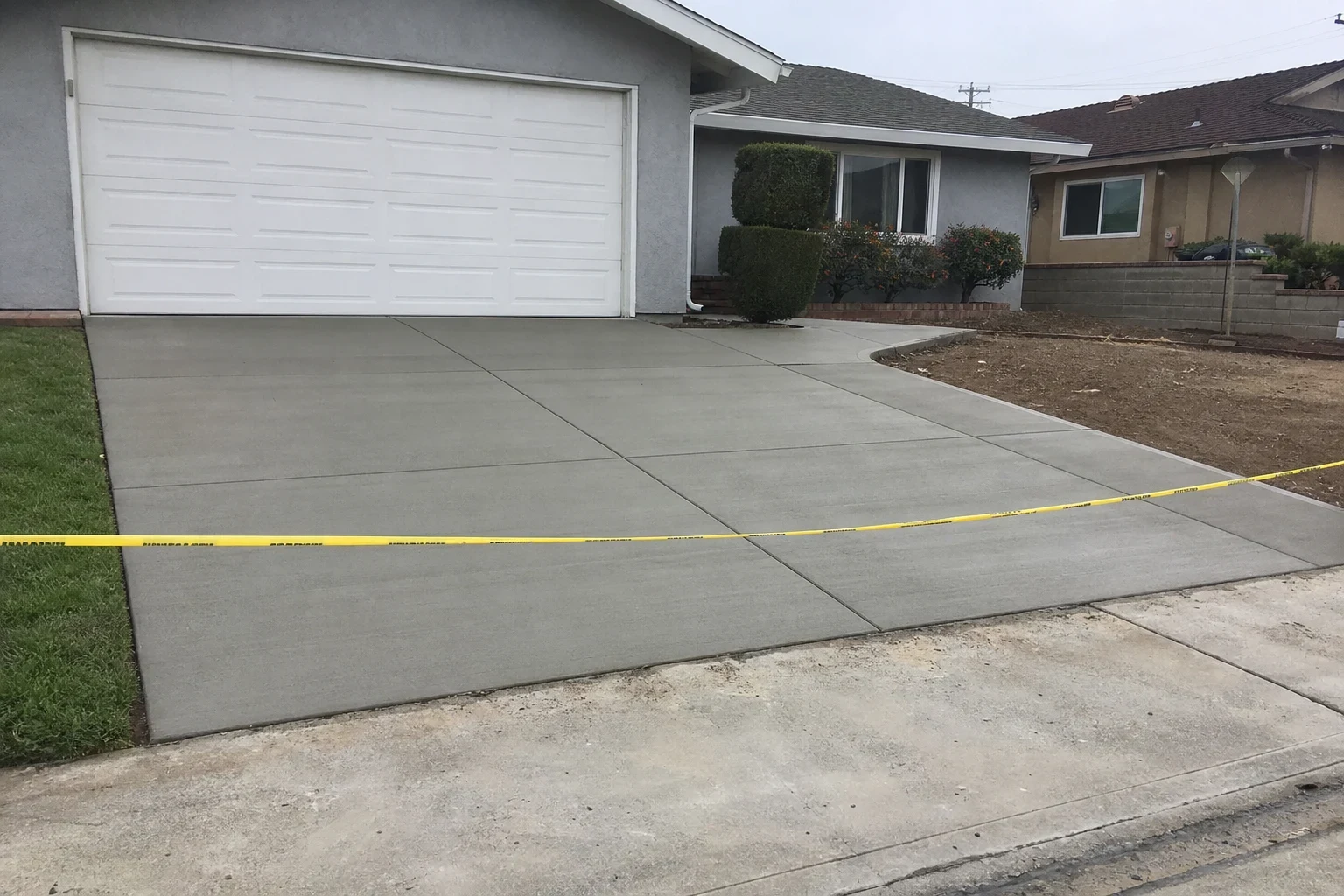
Tell us how wide the run is and what is out there now. We will walk you through grade, drainage and access, then give you a written estimate.