ServicesGarage Floors
Concrete Garage Floors in Fountain Valley
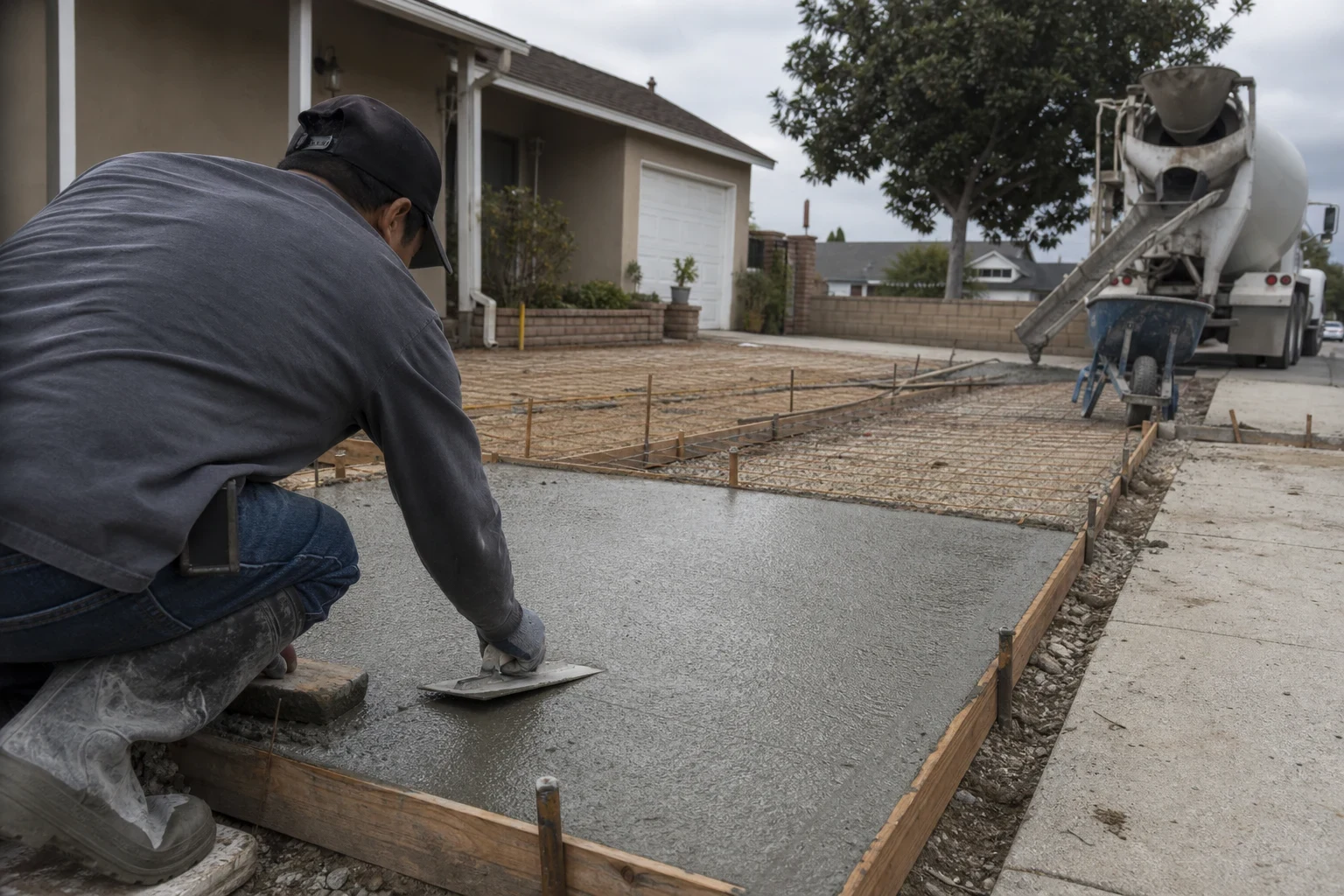
We remove a cracked, sunken or stained garage slab and pour a new one on a compacted base with steel reinforcement and a vapor barrier. Demolition is wet-cut to keep silica dust down, and the work area stays closed off from the rest of your home.
A new slab, built from the base up
A garage floor carries more load than most concrete at your home. A loaded SUV or pickup puts its weight on four small tire patches, hot tires soften sealers, and oil, brake fluid and road salt from beach trips soak into the surface. When the base under the slab settles or was never compacted, the floor drops in sections and cracks spread from the corners.
Our garage floor work is full replacement: we break out the old slab, fix what is underneath and pour new concrete. We do not patch or resurface existing floors. If your garage is fine and you need a new pad outside instead, our Concrete Slabs and Driveways pages cover that work.
Garages also hold the things that make a job site risky: a gas water heater, a furnace, outlets near the floor and the door opener's safety sensors. We plan around each of those before the first saw cut, so the work is safe for our crew and for your household.
What the job includes
Wet-cut demolition
We saw-cut the slab edges with water feeding the blade, then break and haul out the old concrete. Wet cutting keeps crystalline silica dust out of the air, and we seal the door into the house with plastic sheeting.
Base repair and compaction
Soft or wet soil is dug out and replaced with crushed aggregate base, compacted in lifts with a plate compactor. A firm, even base is what keeps a new slab from settling the way the old one did.
Vapor barrier
A polyethylene vapor barrier goes under the slab to slow ground moisture from wicking up. That matters if you store boxes on the floor or plan a coating later.
Steel reinforcement
We set rebar or welded wire mesh on chairs so it sits in the middle of the slab instead of lying on the dirt, where it does no work.
Slope and joints
The floor is screeded with a gentle fall toward the garage door so water drains out. Control joints are cut at planned spacing so shrinkage cracks follow straight lines instead of wandering across the floor.
Finish and cleanup
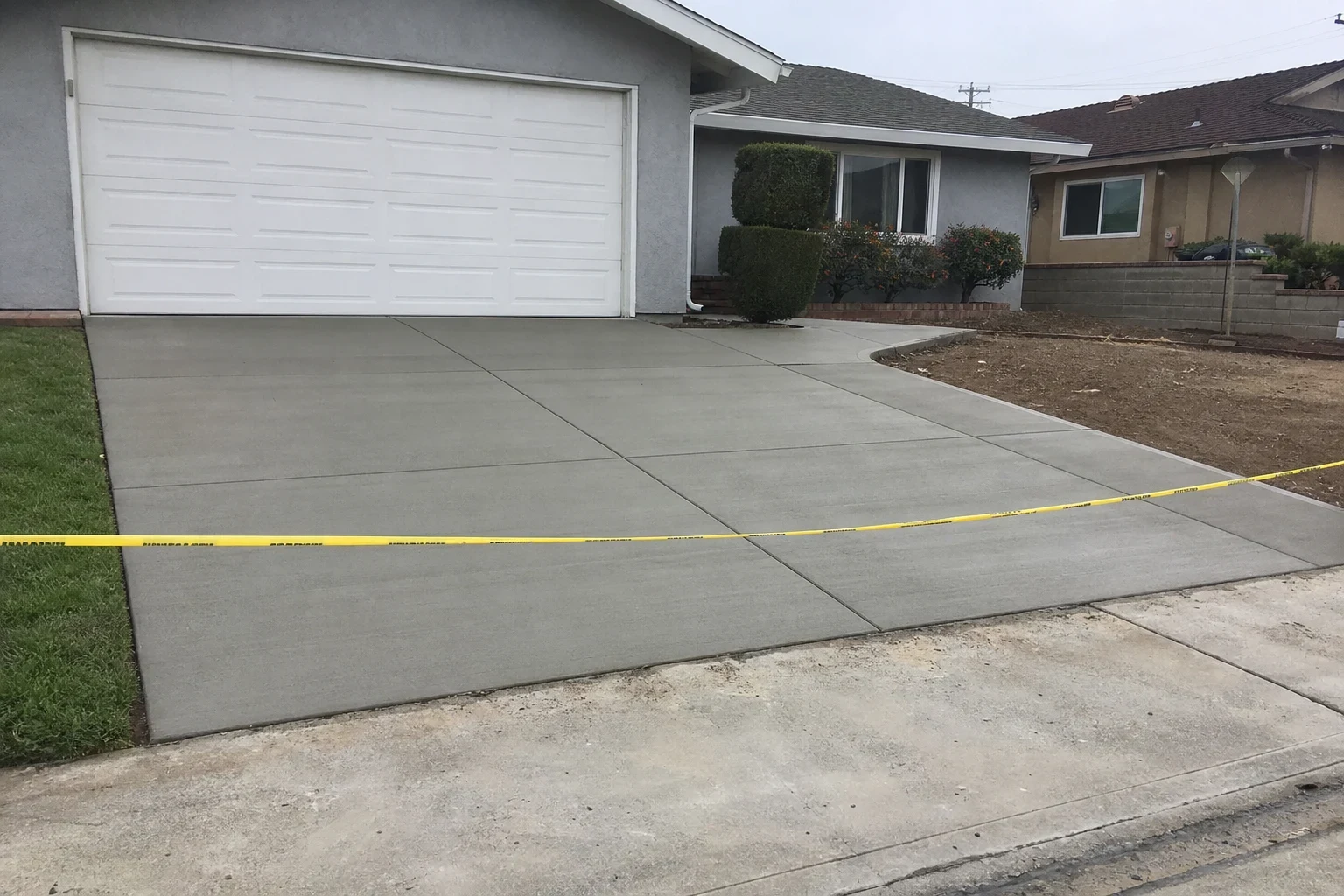
You choose a broom finish for grip or a smooth trowel finish that is easier to sweep. We wash down the driveway and leave the space clear.
Signs it is time for a new garage floor
Sunken or tilted sections
A section that has dropped below its neighbor means the base under it has failed. New concrete over the same weak base will move again, so the base has to be rebuilt.
Trip edges at cracks
When one side of a crack sits higher than the other, it catches toes and cart wheels. That lip is a fall hazard, especially in a dim garage.
Water pooling toward the house
If rinse water or rain runs back toward the house door or the water heater instead of out the garage door, the slope is wrong. Standing water near a gas appliance or outlet is a safety problem.
Crumbling, scaling surface
Flaking and loose grit usually point to a weak original mix or years of chemical spills. The surface keeps shedding and will not hold a sealer or coating.
Door will not seal
A garage door that leaves a gap at one end often sits on a slab that has settled unevenly. Pests and runoff get in, and the opener's sensors can misread.
How the work goes
- 1
Walkthrough by phone and on site
We talk through what you are seeing, then look at the slab, the drainage and the appliances in the garage. We tell you whether the city needs a permit for your job and handle it if so.
- 2
Prep and protection
You clear the garage of stored items. We cover the water heater and furnace, shut off or protect nearby outlets, disconnect the door opener and seal the entry to your home.
- 3
Demolition and base
Wet-cut demo, haul-off, base repair and compaction usually take a day. Kids and pets need to stay out of the garage and away from the equipment while we work.
- 4
Steel, barrier and pour
We set the vapor barrier and reinforcement, then pour, screed to slope, finish and cut joints. Fresh concrete is caustic, so we keep the area taped off.
- 5
Curing and handback
Foot traffic is usually fine after a day or two. Hold off on parking for about a week so the slab gains strength before it carries a car.
What moves the price
Every garage floor is priced from what we find on site, not from a flat rate. We walk you through each line so you know where the money goes before any work starts.
- Floor size
- A one-car garage and a three-car garage need very different amounts of concrete, steel and labor.
- Demolition and haul-off
- Thicker old slabs, or slabs with a coating or tile on top, take longer to break out and weigh more to haul.
- Condition of the base
- Wet or soft soil that has to be dug out and replaced with aggregate base adds material and compaction time.
- Access for the pour
- Most garages take concrete straight from the truck. A tight lot or long run can mean a pump or wheelbarrow work.
- Permit and finish
- Permit fees, where the city requires one, and a smooth trowel finish versus a broom finish both affect the total.
Garage floor questions
Something not covered here? (714) 617-7914
When can I drive my car back into the garage?
Give the new slab roughly seven days before it carries a vehicle. Concrete keeps curing and gaining strength for weeks, and tire weight on a two-day-old floor can leave marks or start a crack. You can usually walk across it after the first day or two.
Can you pour a new layer over my old floor?
No, we do not cap an old garage slab with fresh concrete. If the base underneath has failed, it keeps moving, and a thin overlay tends to crack and peel away from the old surface. An overlay also lifts the floor at the door threshold and the step into the house, which leaves a trip edge.
What happens with my water heater during the work?
We wrap it and keep saws and other equipment away from the unit and its gas line. If it stands on the section being replaced, we go over the plan with you before demolition, because a plumber may need to disconnect it and reset it once the new concrete has cured.
Will the dust get into my house?
Cutting with water on the blade and sealing the interior door with plastic sheeting keeps most of the dust inside the garage. On demolition day, keep the windows on that side of your home shut.
Will the new floor crack?
Concrete shrinks as it cures, so a few hairline cracks are expected. The control joints we cut give that shrinkage a straight, planned line to follow, while the compacted base and the steel hold the sections level with each other.
Ready for a level, safe garage floor
Tell us what your slab is doing and how you use the garage. We will explain what the job involves and how we keep your household safe while it happens.