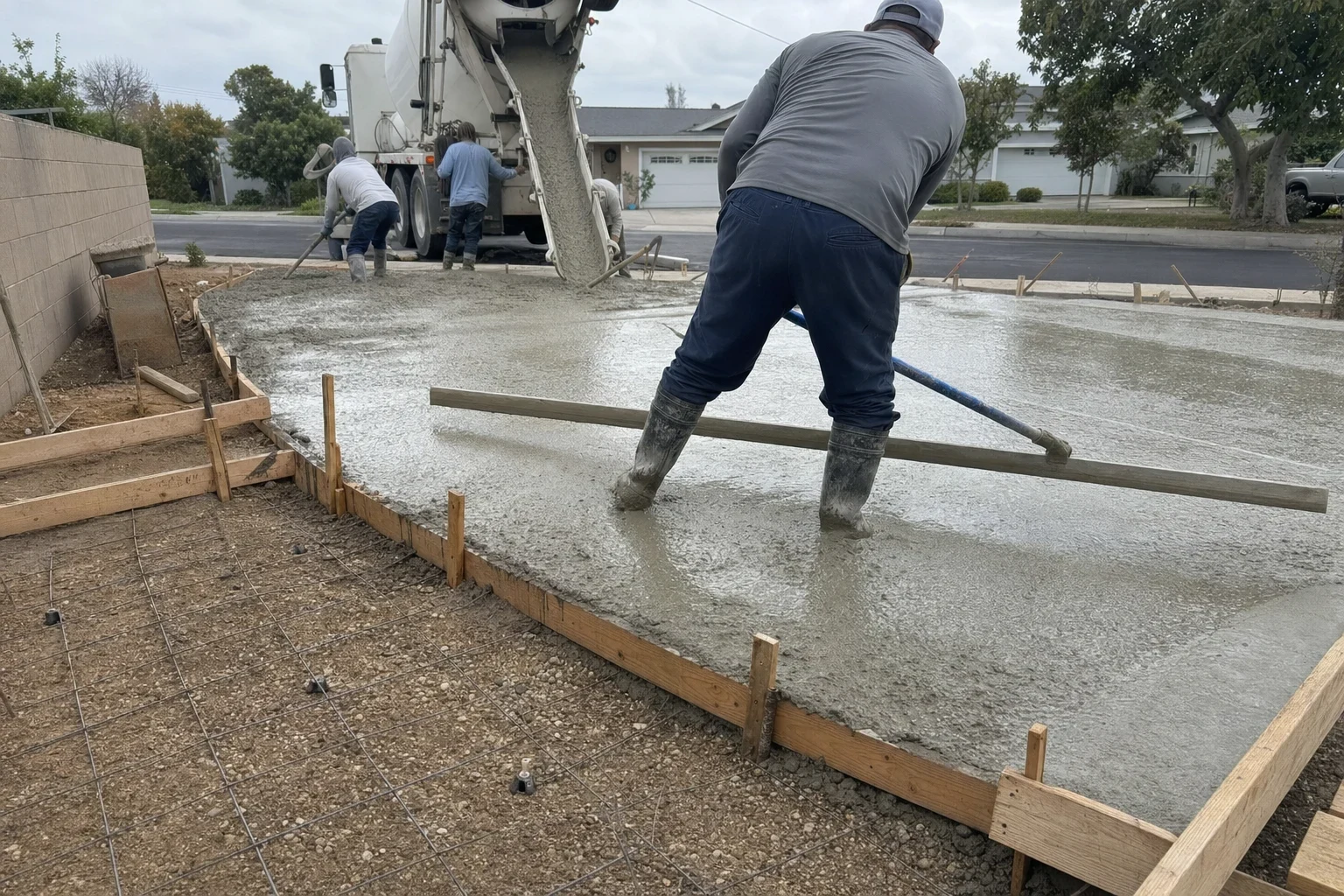
Concrete for Your Home in Fountain Valley, Built Safe Underfoot
We pour driveways, patios, stamped concrete, pool decks, slabs and walkways for homes in Fountain Valley, Huntington Beach and Garden Grove. Every job starts with the base, the slope and the edges, because that is where trips, slips and standing water begin. You get a surface that drains, stays flat and holds steady footing.
- Written line-item estimates
- Base compacted before forming
- Job site kept safe daily
- Slip-resistant finishes chosen
How a Concrete Job Runs
Most residential flatwork follows the same sequence. Here is what you can expect from the first call to the day you can use the surface.
- 1
Phone call and site visit
You tell us what you want poured and where. We visit, measure, check the soil and drainage, look at access for the truck, and note utility lines, sprinkler pipes and anything near the forms that needs protecting.
- 2
Written estimate and permits
We send a line-item estimate covering demolition, base, reinforcement, finish and cleanup. If the job needs a city permit, we pull it and schedule any required inspection.
- 3
Demolition, grading and forms
We remove old concrete, excavate to depth, compact the aggregate base and set forms to the planned slope. Rebar or wire is propped up on supports so it ends up near the middle of the pour, because steel lying on the ground adds almost no strength.
- 4
Pour, finish and joints
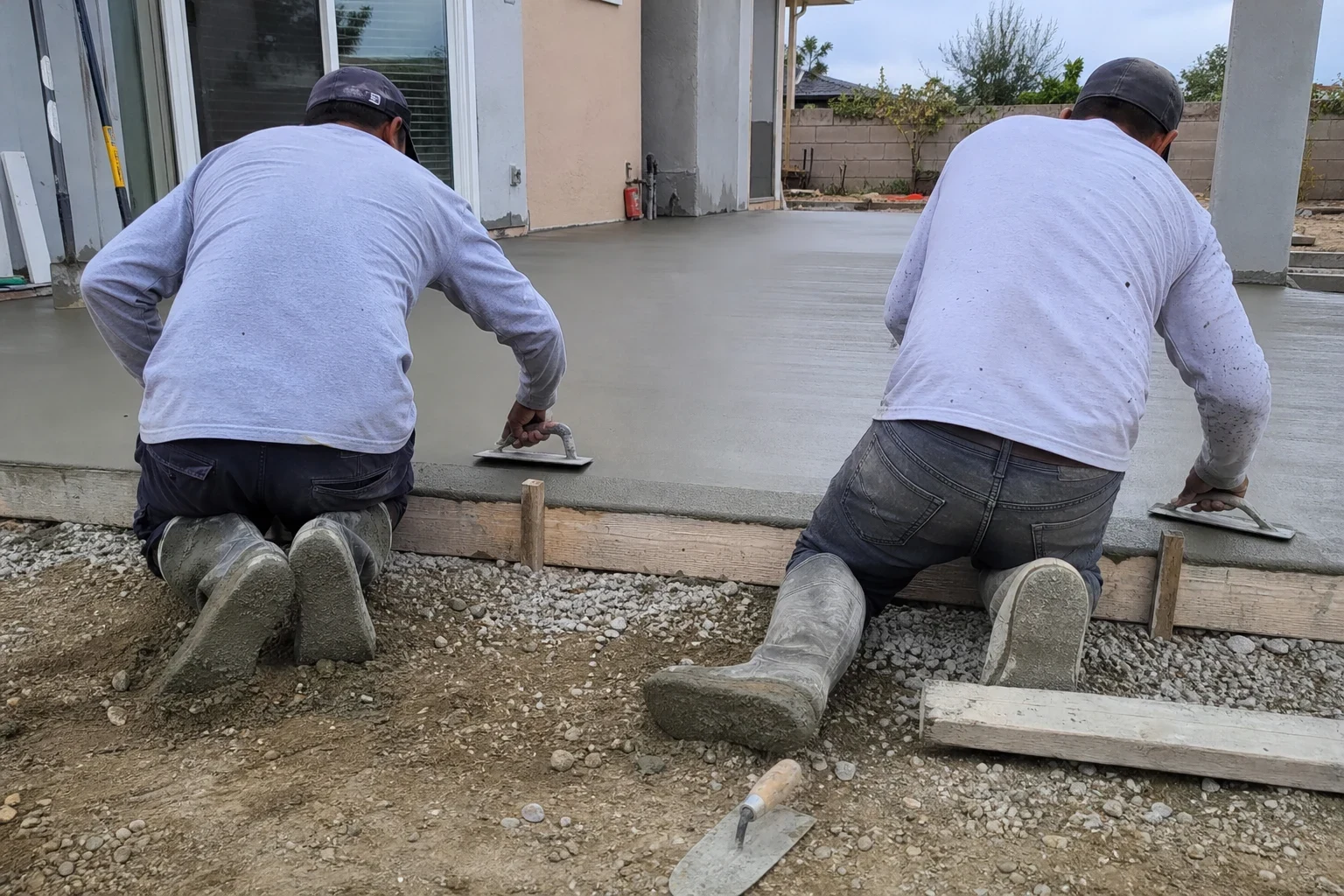
We place and screed the concrete, float it, then apply the finish you chose. Control joints are tooled or saw-cut within the right window, and the surface is kept moist or covered so it cures evenly instead of drying too fast in the sun.
- 5
Cleanup and curing guidance
We pull forms, backfill the edges, haul away debris and rinse the work area. You get clear guidance on when to walk on the surface, when to drive on it and when to seal it.
Concrete Services for Your Home
We handle new concrete outside your home, from a single set of steps to a full backyard. That includes driveways, patios, stamped concrete, concrete pool decks, side yards, courtyards, RV parking pads, garage floors, slabs, and walkways and sidewalks. Each one gets the same groundwork: excavation to the right depth, a compacted aggregate base, steel reinforcement where the load calls for it, and a finish matched to how the surface will be used. Pick a service below to see how that work runs.
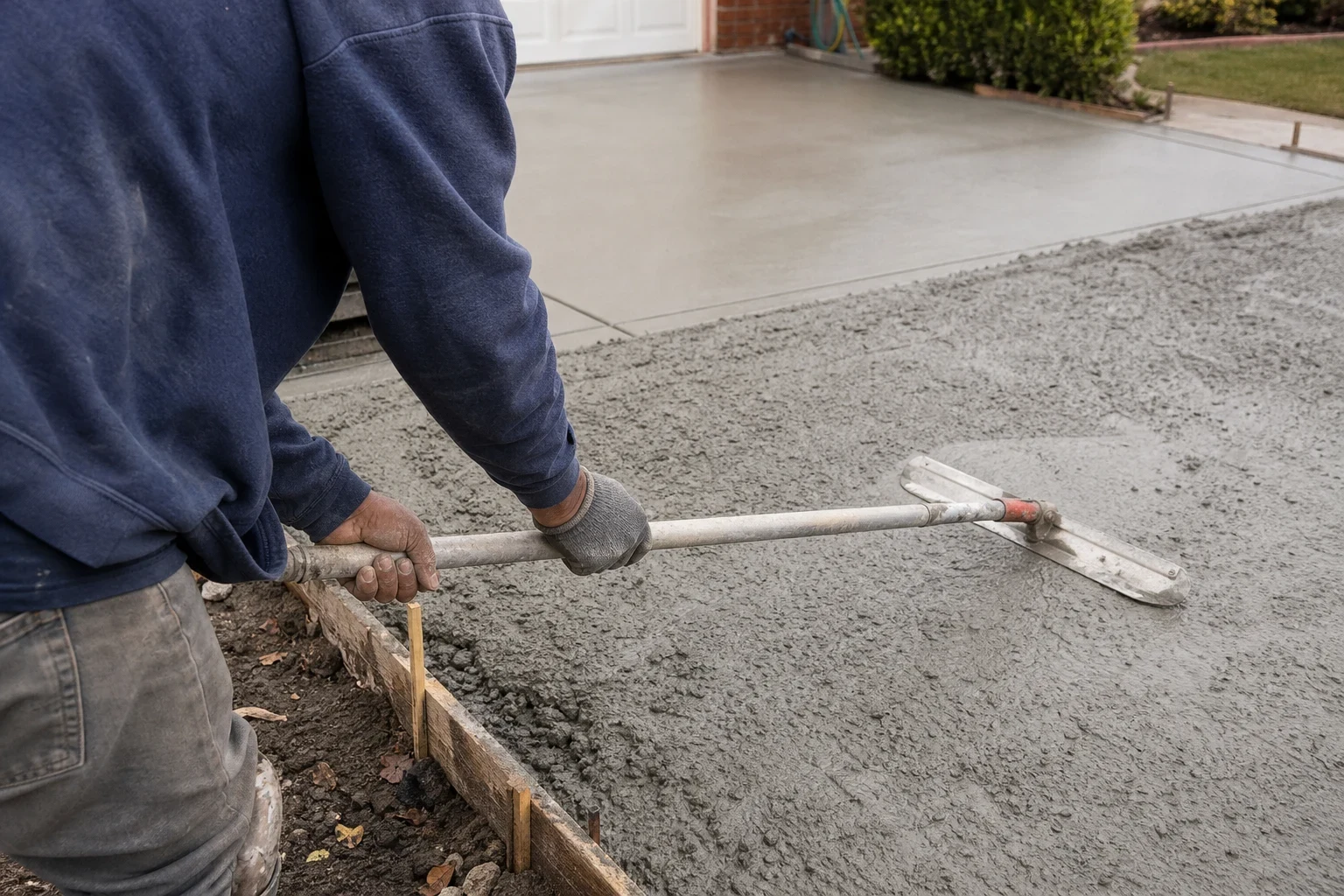
Driveways
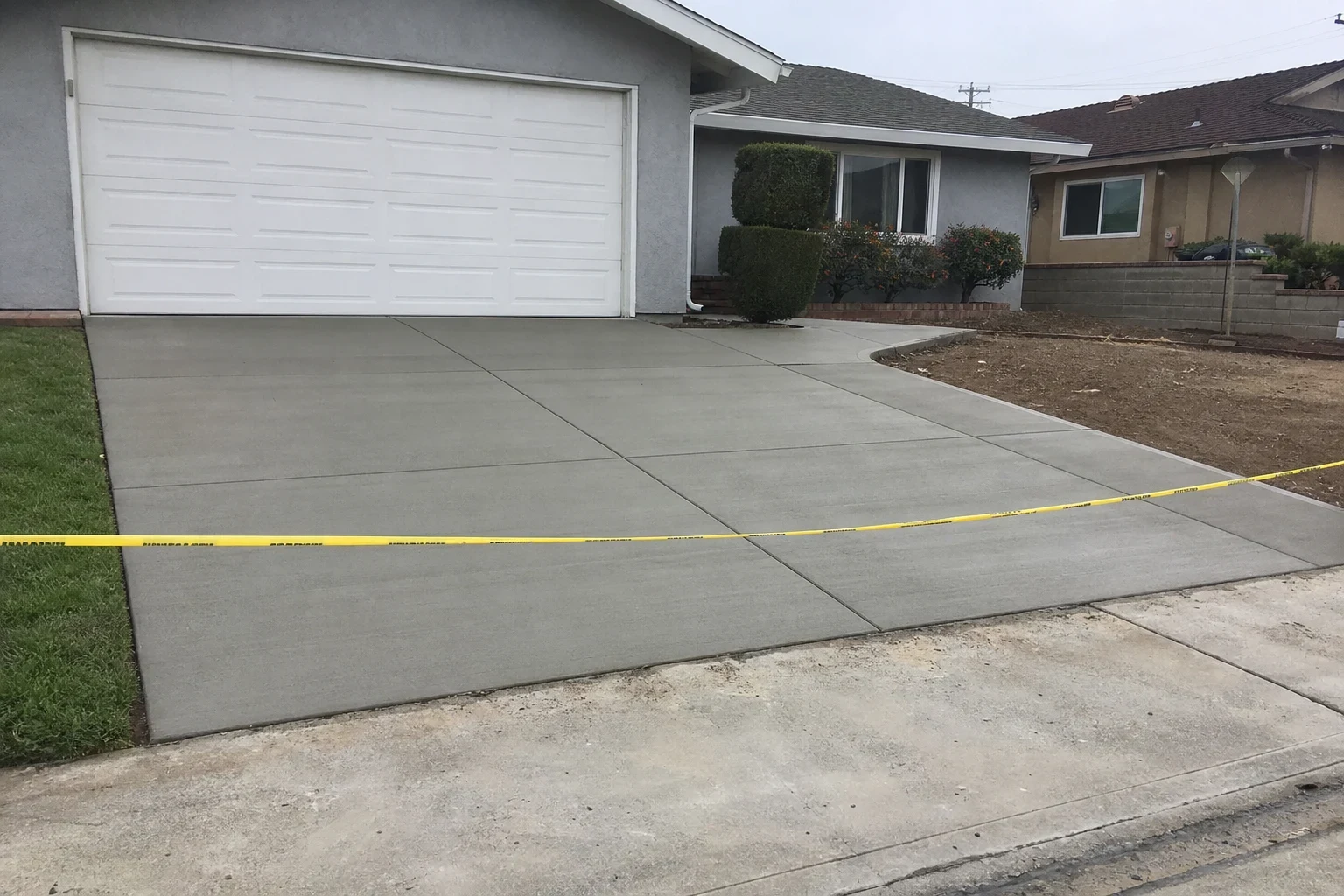
Old driveway torn out and replaced with a reinforced, properly sloped slab on a compacted base, with a work area kept safe for your family.
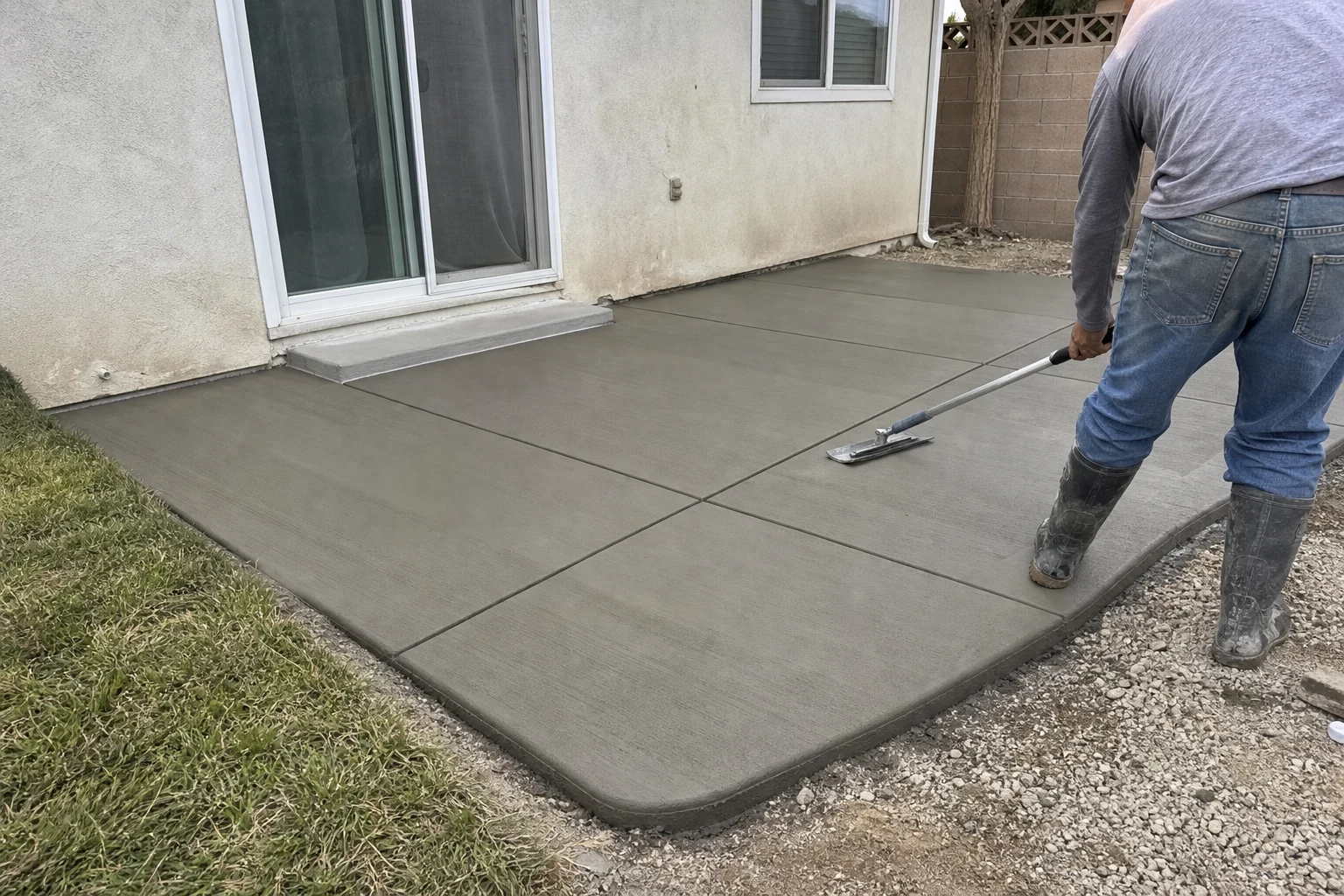
Patios
A concrete patio that drains away from your home, keeps edges flush and holds a textured finish that stays grippy around hoses, sprinklers and spilled drinks.
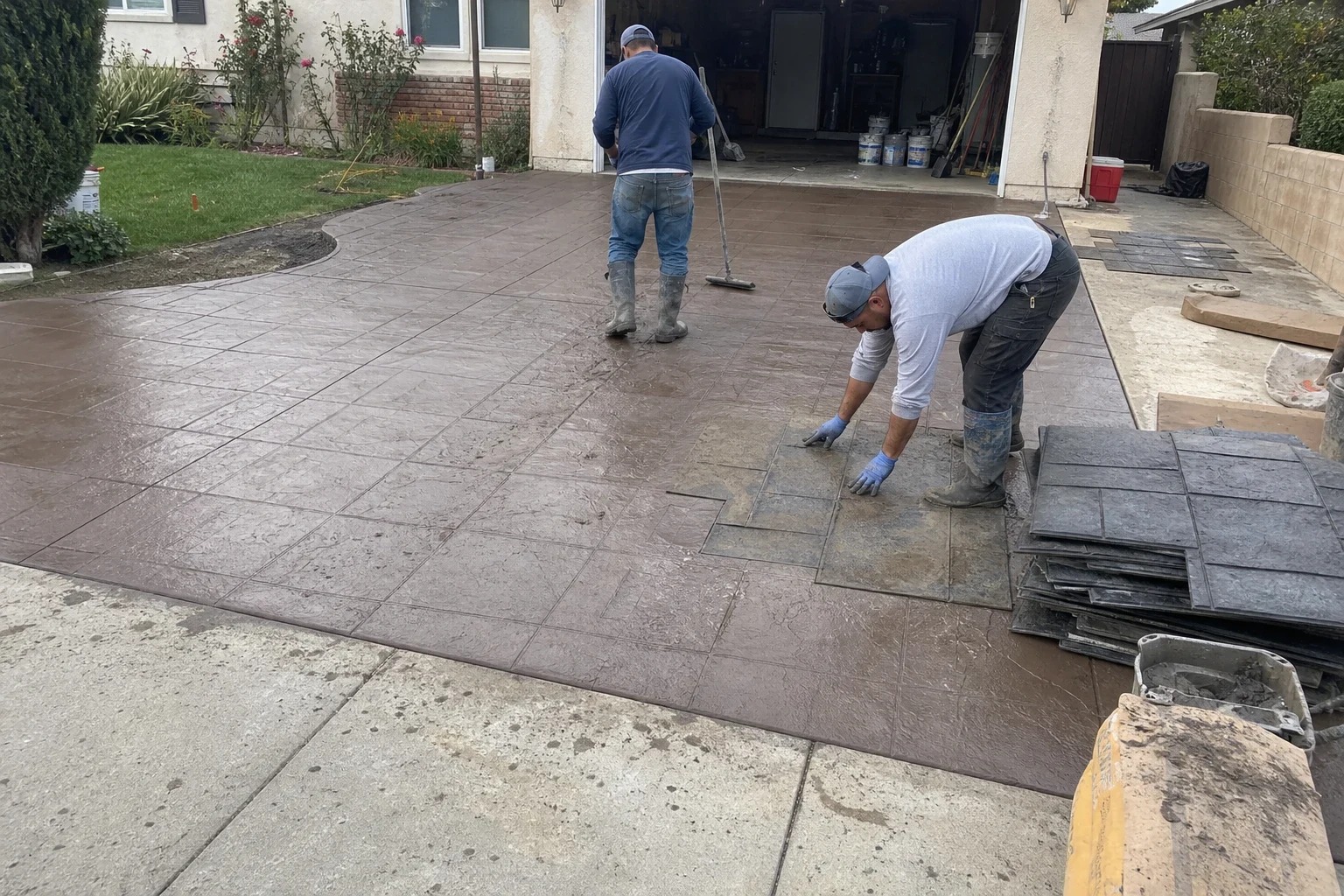
Stamped Concrete
Patterned, colored concrete poured on a compacted base and sealed with grit so the texture looks like stone and stays safe underfoot when wet.
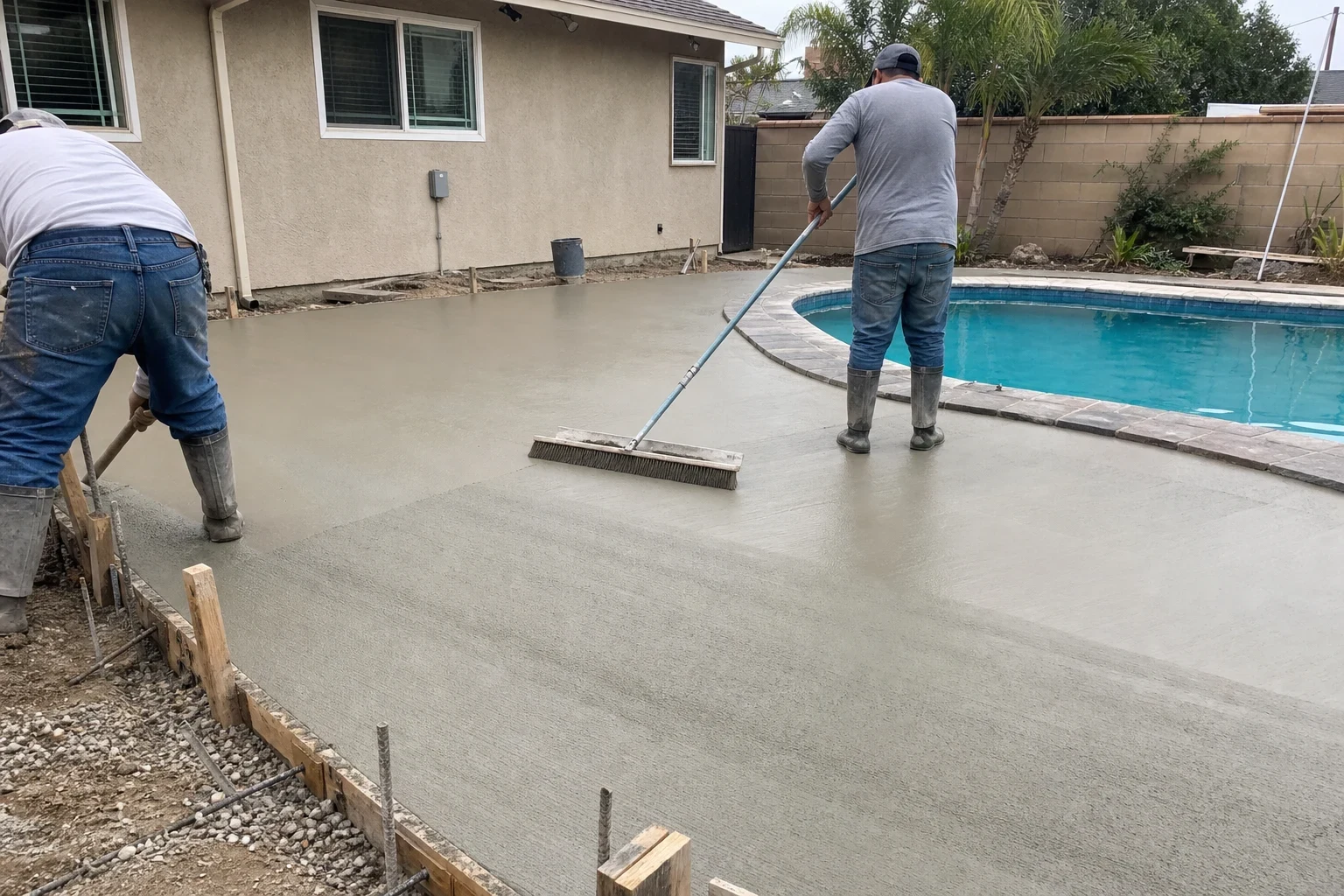
Concrete Pool Decks
New concrete pool decks with a grippy wet-foot finish, a steady slope away from the water and a flexible sealed joint at the coping.
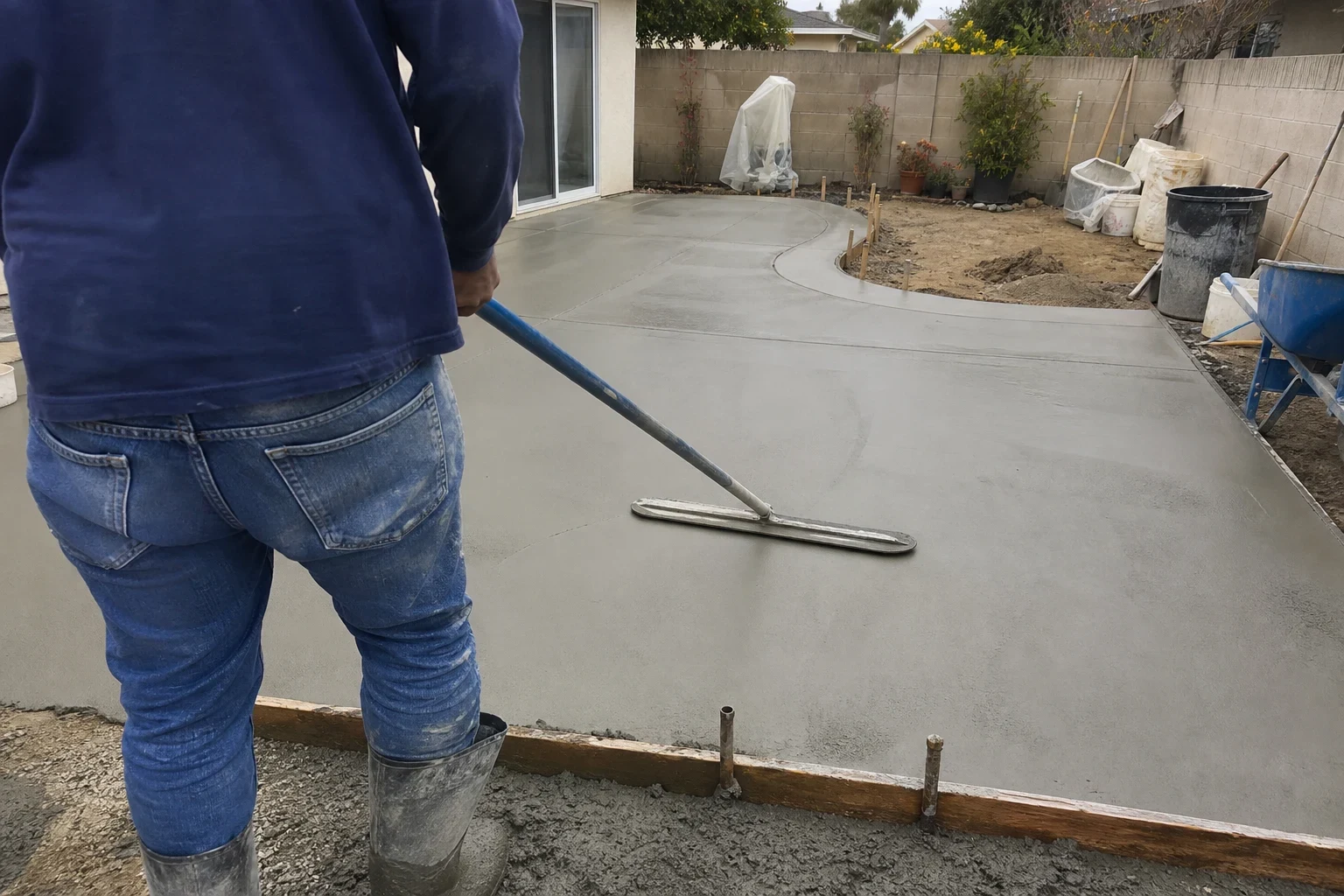
Concrete Backyards
Full backyard concrete laid out for drainage, reinforced with rebar and finished for grip, with the work area kept closed off from kids and pets.
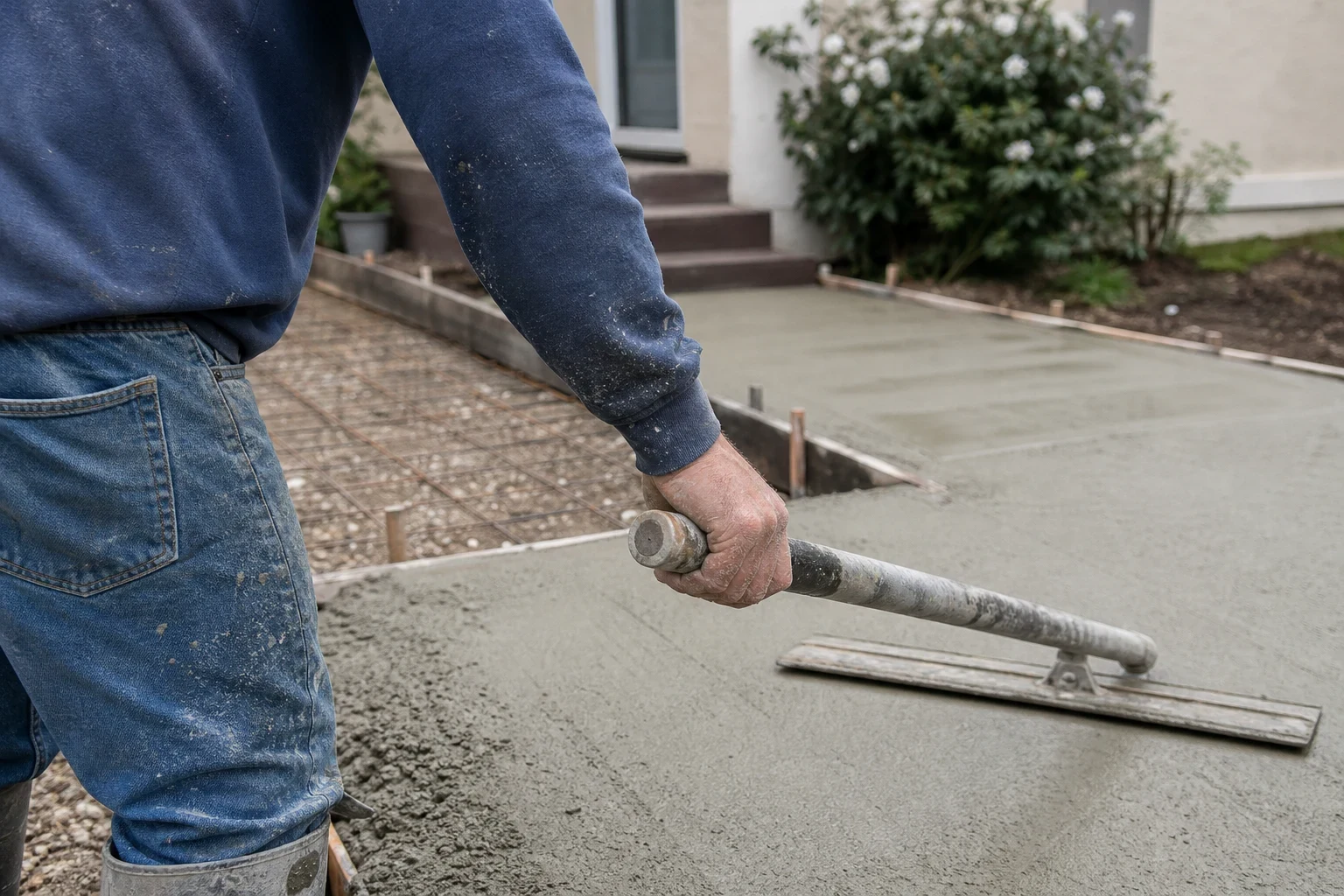
Concrete Slabs
Flat, reinforced slabs for sheds, hot tubs, equipment and work areas, formed to the right thickness and sloped so water runs away from your home.
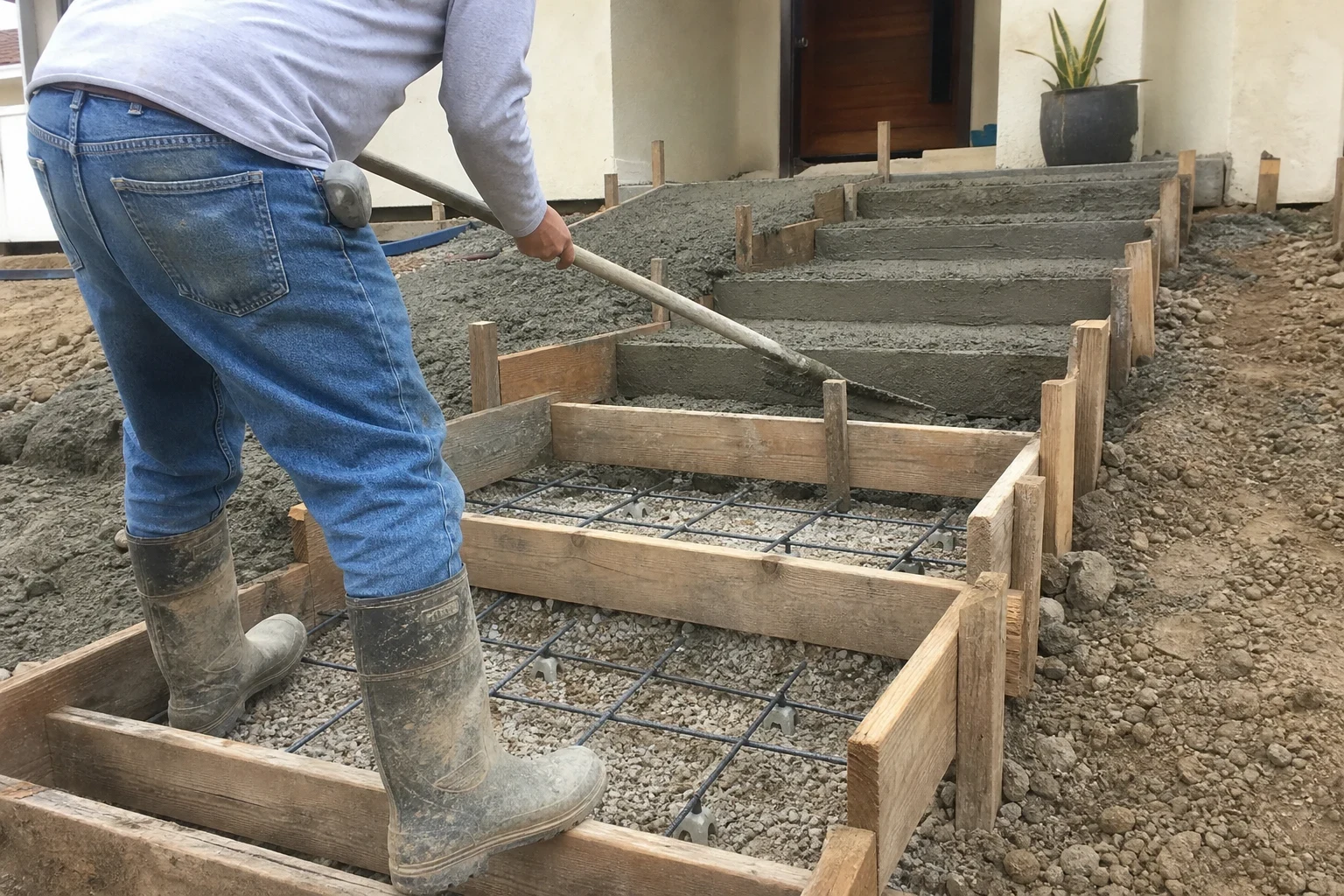
Steps and Stairs
New concrete entry steps and yard stairs with consistent riser heights, doweled connections and broom finishes that grip when wet.
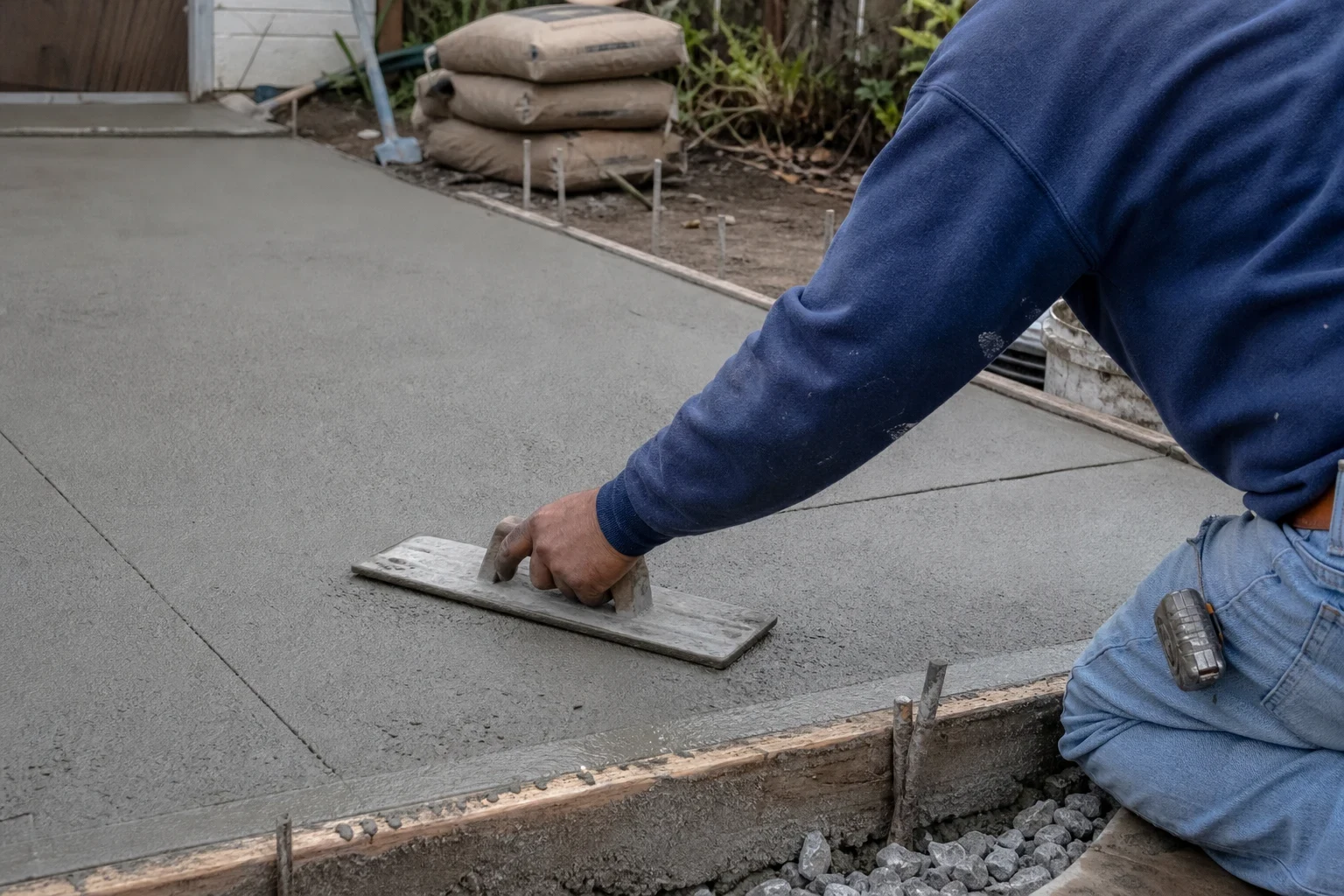
Concrete Side Yards
We turn muddy or uneven side yards into firm, sloped concrete paths that move water away from your foundation and keep trash-can runs safe underfoot.
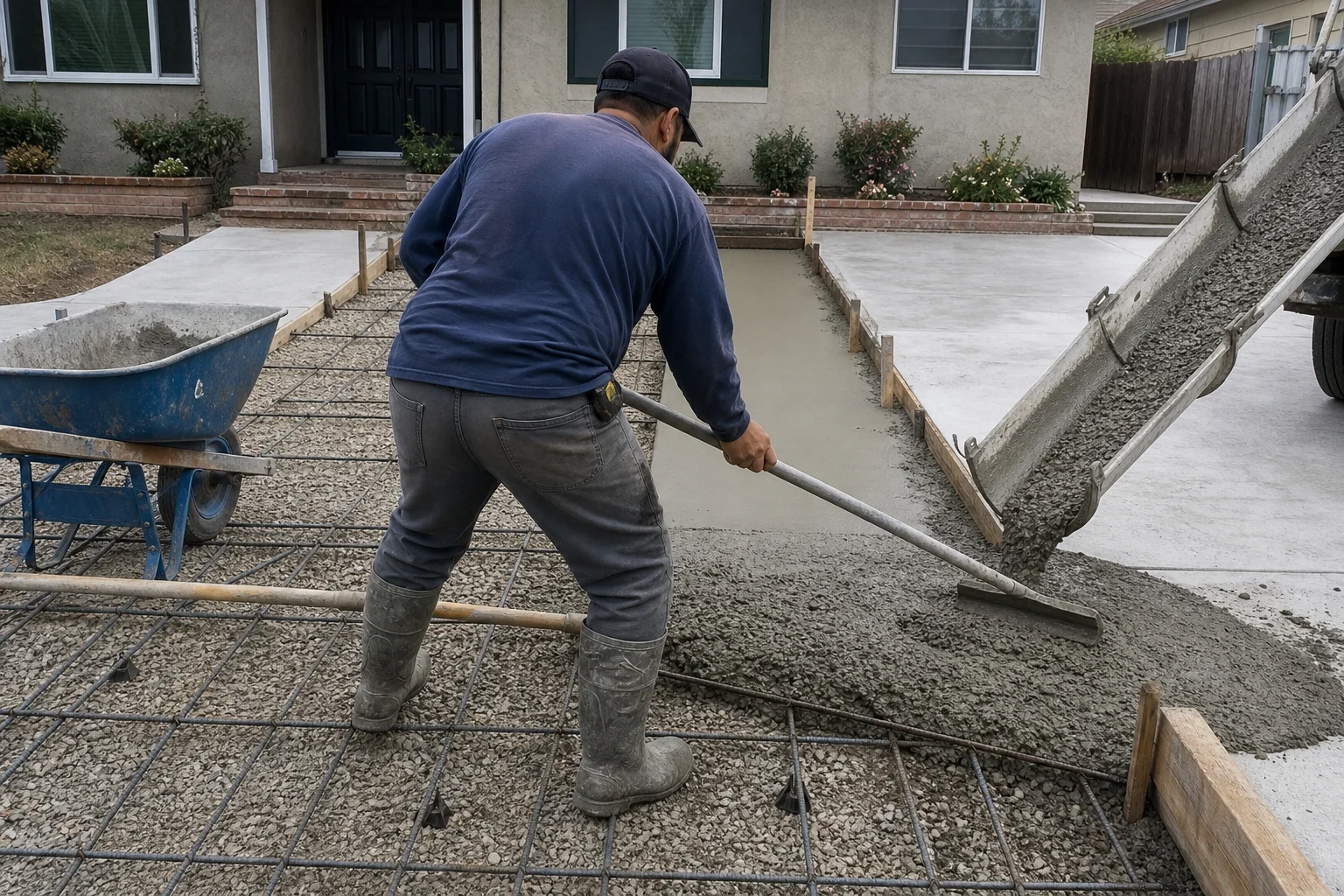
RV Parking Pads
Reinforced RV pads poured thicker than a standard driveway, sloped to drain and laid out so you can back in and level up safely.
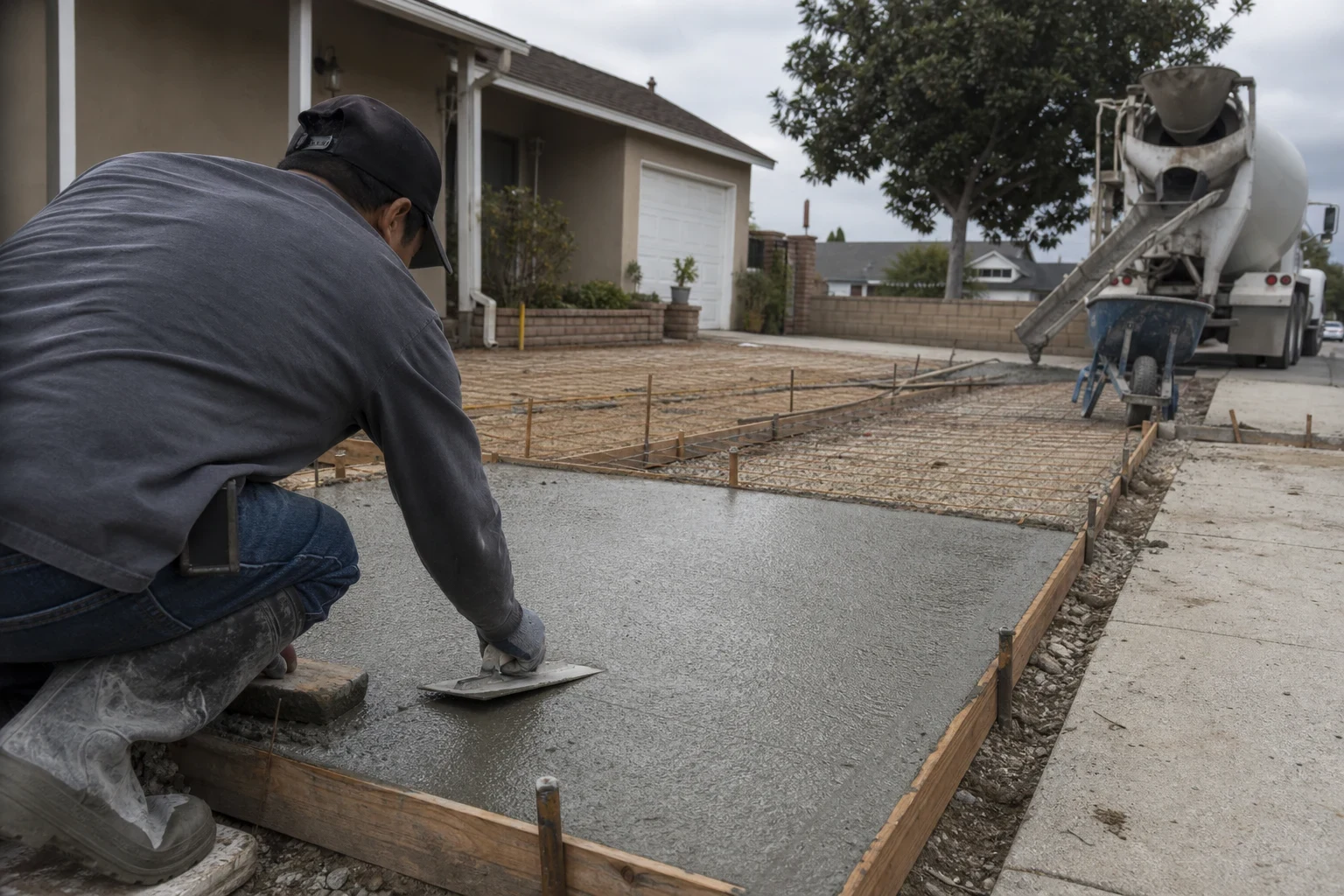
Garage Floors
Old garage slab torn out and replaced with a reinforced, properly sloped floor, with wet-cut demo and a protected work area around your water heater.
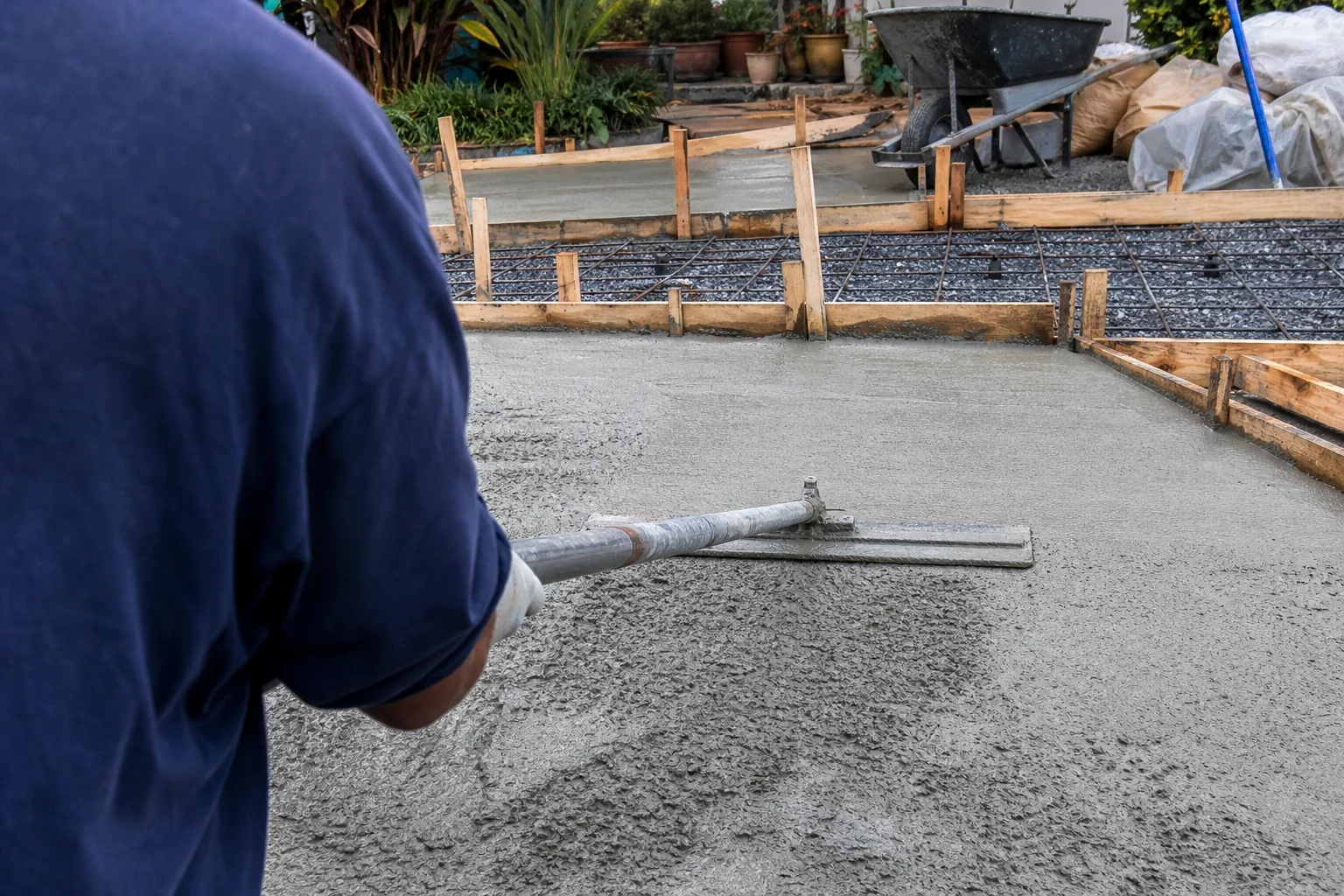
Concrete Courtyards
New concrete courtyards sloped away from your walls, jointed to control cracking and finished with traction that stays safe in wet weather.
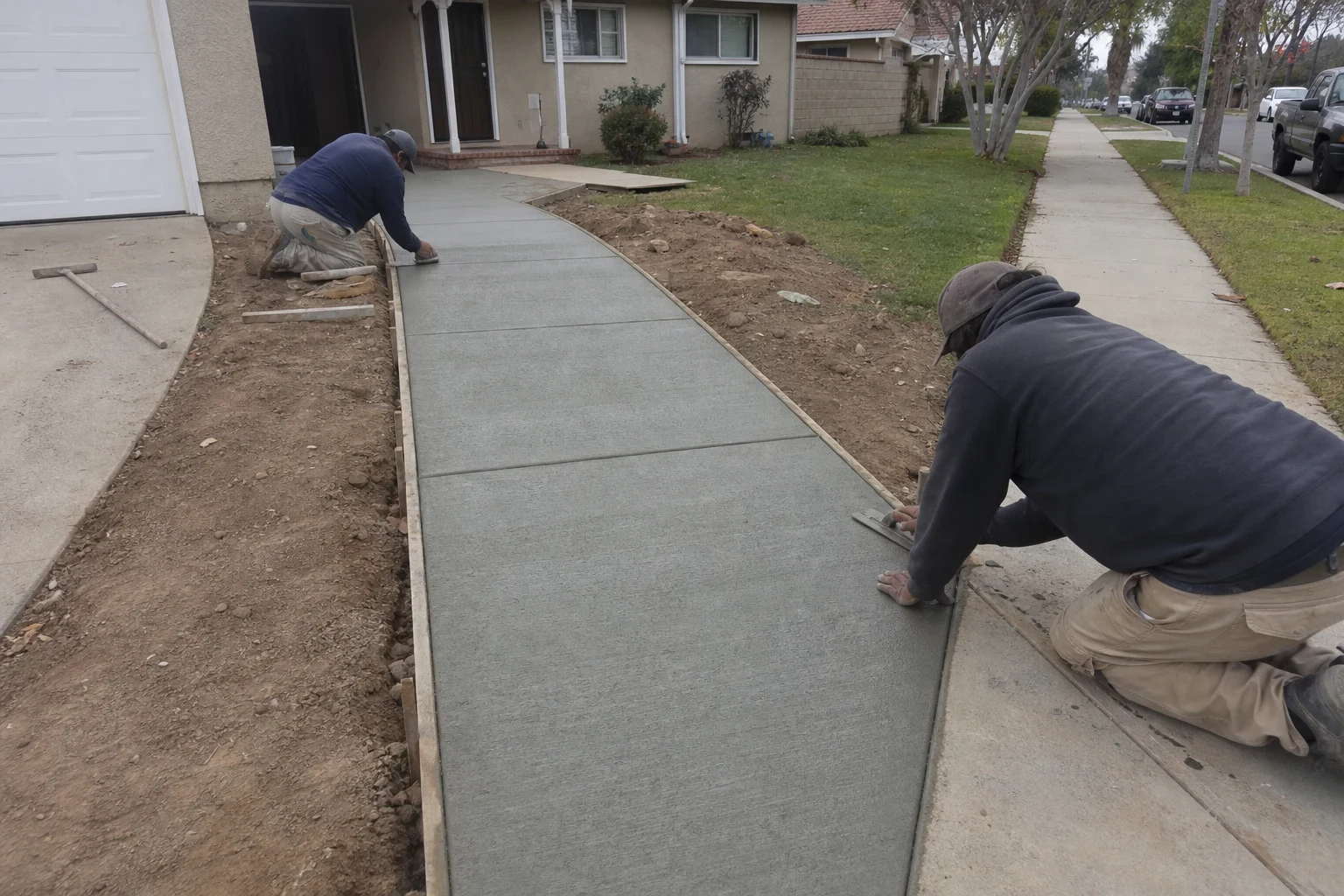
Walkways and Sidewalks
New concrete walks and sidewalks poured on a compacted base, with control joints, a grippy broom finish and edges that leave no trip lip.
Where We Pour Concrete
We work throughout Fountain Valley and the surrounding cities, including Huntington Beach, Santa Ana, Garden Grove, Costa Mesa and Westminster. We also take projects in Midway City, Orange, Newport Beach, Tustin and Cypress. The soil, drainage and permit steps vary a little from city to city, and we account for that at the site visit.
- Fountain Valley
- Santa Ana
- Huntington Beach
- Garden Grove
- Costa Mesa
- Westminster
- Midway City
- Orange
- Newport Beach
- Tustin
- Cypress
If your home is close to these areas but not listed, ask when you call and we will tell you whether we can take the job.
Why Homeowners Choose Our Crew
Concrete looks simple when it is done. Most of the safety in a finished slab is decided before the truck arrives, in the soil prep, the slope and the joint layout.
Footing comes first
We match the finish to the spot. A light broom texture on a driveway, a salt or textured finish around a pool, and no slick troweled surfaces where people walk wet. Edges get a tooled radius so there is no sharp lip to catch a toe or a shin.
Slope set for drainage
We set forms so water runs away from your foundation and off walking paths, typically a gentle fall of about a quarter inch per foot. Puddles on flatwork turn into slick spots, algae and undermined base, so we plan the water path before we plan the color.
Control joints where cracks want to go
Concrete shrinks as it cures, and it will crack somewhere. We cut or tool control joints at spacing tied to slab thickness so that shrinkage happens in a straight, planned line instead of a jagged trip edge across the middle.
A job site you can live around
Open trenches, rebar ends and wet concrete are real hazards for kids, pets and guests. We cap exposed rebar, mark off the work area at the end of each day, and keep the path to your front door clear.
Straight answers on paper
You get a written estimate that lists demolition, base, reinforcement, finish and cleanup as separate lines. If the existing soil or old slab changes the plan, we show you photos and explain why before any added work starts.
What Moves the Price of a Concrete Job
Square footage matters, but it is rarely the whole story. Two patios of the same size can price very differently once we look at what has to come out, what is underneath and how a truck reaches the pour.
We price each job after seeing the site and measuring it, then put every line in writing. Get your quote by phone and we will set a time to look at the area.
- Removal of existing concrete
- Breaking out an old slab and hauling the debris adds labor and disposal. Thick or heavily reinforced concrete takes longer to remove than a thin patio.
- Soil and base condition
- Clay soils common in coastal Orange County swell when wet and shrink when dry. Soft or expansive ground may need deeper excavation and more compacted base to keep the new slab from heaving or settling.
- Thickness and reinforcement
- A walkway can sit on a thinner section than a driveway or RV parking pad that carries vehicle weight. Thicker pours and more rebar mean more material and more time.
- Finish and decorative work
- A broom finish is the simplest. Stamped patterns, integral color, release agents, exposed aggregate and sealing each add steps and materials.
- Access to the pour
- When a ready-mix truck can back up to the forms, the pour moves quickly. Narrow side yards and enclosed backyards may need a concrete pump or wheelbarrow runs, which adds equipment and crew.
- Permits and inspections
- Work that touches the public sidewalk or a driveway approach usually needs a city permit, and some projects need an inspection before the pour. We include those steps in the estimate when they apply.
Concrete Questions We Hear Often
Something not covered here? (714) 617-7914
Do you offer a warranty on your concrete work?
Yes. Our concrete work comes with a 1-year warranty. We walk you through what that coverage includes when we go over the written estimate together, before anything is poured.
Will my new concrete crack?
Almost every slab gets some hairline cracking, because concrete shrinks as water leaves the mix while it cures. What we can control is where those cracks go. Control joints, a well-compacted base and careful curing keep cracking in planned lines instead of running across the open surface.
How soon can we walk and drive on it?
In mild weather, foot traffic is usually fine after a day or two. Cars generally wait about a week, and heavier loads such as RVs or work trucks need longer. Concrete keeps gaining strength for roughly four weeks, so we give you specific dates based on the mix and the conditions on pour day.
Will a new driveway or patio need a city permit?
That comes down to where the concrete goes. Work on a driveway approach or the public sidewalk at the street normally requires a permit from the city, while plenty of backyard patios need none. We look up the rules for your city and take care of the permit and any inspection when the project calls for one.
How do you keep a pool deck from getting slippery?
We stay away from smooth troweled finishes near water. A salt finish, light broom, textured stamp or exposed aggregate gives bare feet better grip, and a slip-resistant additive can be mixed into the sealer. The deck is also sloped away from the pool and toward drains so water does not pool.
What happens with my kids and pets during the job?
We mark off the work zone, cap exposed rebar and keep tools out of walkways. Wet concrete is caustic and can burn skin, so we ask that children and pets stay off the area until it has set. Each evening we let you know which parts of the yard are safe to use.
How long does a typical job take?
A walkway or small patio often runs a few days from demolition to cleanup. Larger driveways, full backyards and stamped work take longer because of the base prep, decorative steps and sealing. You get a schedule along with the estimate.
About Concrete Contractor Fountain Valley
We are a concrete crew that works outside homes across Fountain Valley and nearby cities. Our focus is new flatwork and structures: driveways, patios, steps, slabs and the decorative finishes that go on them. We keep the work in that lane so we do it well.
Our approach is built around safety, for your family during the job and for everyone who walks the surface for years after. That shows up in small decisions. A non-slip finish by the pool, a handrail-ready landing on a set of steps, a slope that keeps water off the walkway, rebar capped at the end of the day. Many homes in the area date from the 1960s and 1970s, with original slabs that have settled or lifted at the joints, and replacing them correctly is much of what we do.
- License
- Licensed by the California State License Board (CSLB)
- Warranty
- 1-year warranty
Ready to Plan a Safer Surface Around Your Home
Tell us what you want poured and where. We will set up a site visit, look at the base and drainage, and put a clear written estimate in your hands.