ServicesDriveways
Concrete Driveways in Fountain Valley
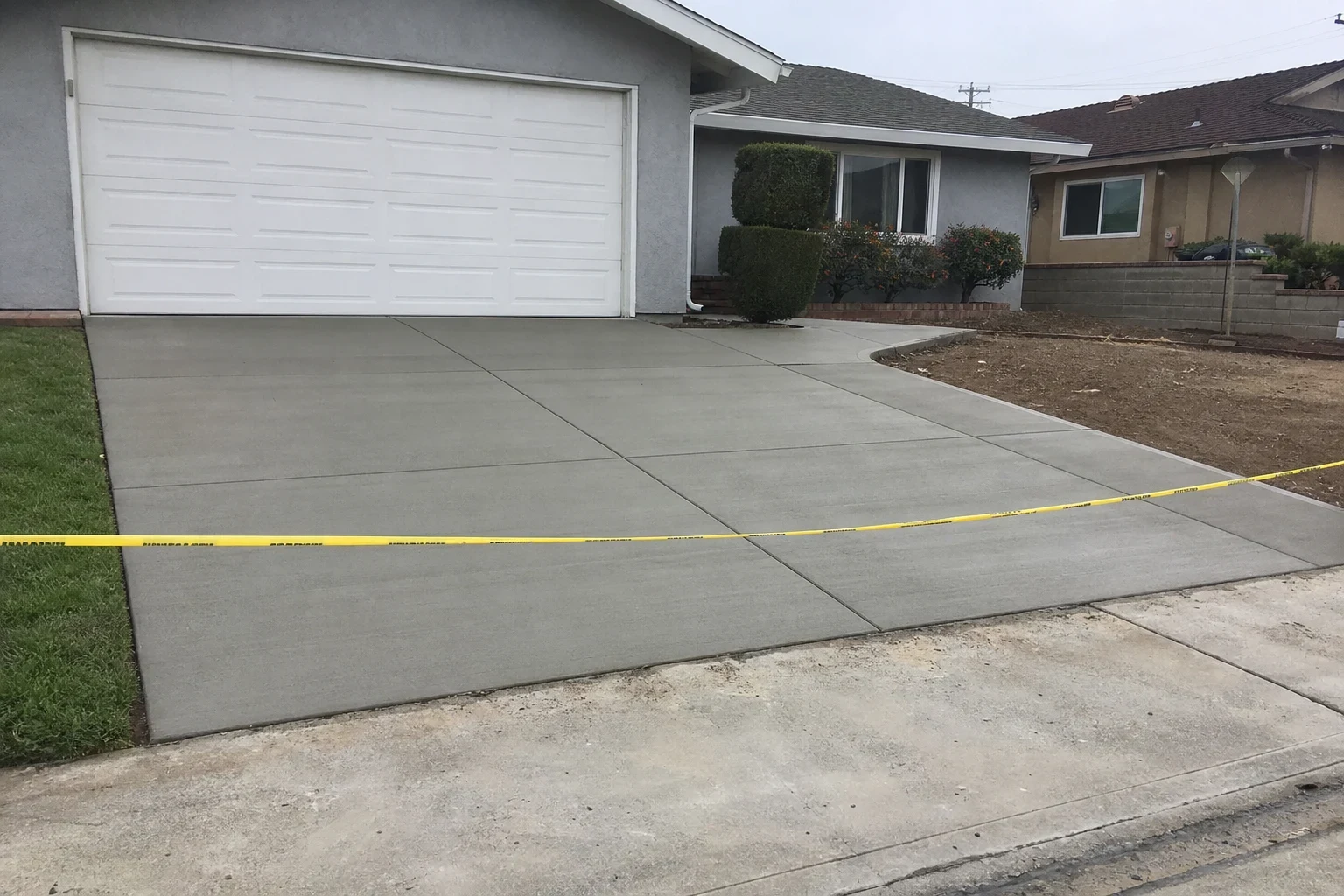
We remove worn or broken driveways and pour new ones built to carry your cars for decades: compacted base, steel reinforcement, planned control joints and a slope that sends water to the street. The job site stays fenced, dust stays down and your family stays clear of the work.
A New Driveway Built From the Ground Up
A driveway fails from the bottom. When the soil under it was never compacted, or the base rock was thin, the slab loses support, settles and cracks across its width. Pouring fresh concrete over that does not fix the cause. We take the old slab out, correct the subgrade and build a new driveway on a base that can hold the load.
Safety runs through how we work. Breaking and hauling concrete means heavy equipment, saw dust that contains crystalline silica and wet concrete that can burn skin. We fence the work area, cut wet to keep dust out of the air, and tell you each morning where it is safe to walk and park.
If you want a decorative surface, our Stamped Concrete page covers patterned finishes that can be poured as part of a new driveway.
What a Driveway Replacement Includes
Utility locating before digging
We contact DigAlert so gas, water and electric lines are marked before any excavation. Hitting a shallow gas line is the most serious risk on a driveway job, and marking is how we avoid it.
Wet-cut tear-out and haul-off
The old slab is saw-cut at the edges so we don't crack your sidewalk, garage apron or walkways, then broken out and hauled away. Water on the blade keeps silica dust down.
Subgrade and base preparation
We remove soft soil and roots, then place and compact roughly four inches of aggregate base. Compaction in thin lifts gives the slab even support so it does not settle unevenly.
Reinforcement and forms
Rebar on a grid, set on chairs so it sits in the middle of the slab, holds cracks tight if the ground moves. Forms are set to a slope that drains water away from your garage.
Pour, finish and joints
A broom finish gives tires and shoes traction when the surface is wet. Control joints are cut to about a quarter of the slab depth so shrinkage cracks follow straight lines instead of wandering.
Cleanup and curing guidance
We wash down the street and gutter, remove forms and leave you a clear schedule for when to walk on the slab and when to drive on it.
Signs It Is Time to Replace Your Driveway
Wide cracks with offset edges
A crack where the two panels no longer line up tells you the base below has given way. The raised edge catches toes and bike wheels, and it gets worse as water carries base material out from under the slab.
Sunken sections or standing water
Water pooling by the garage door, or a slab that pitches back toward the house, means the grade is off. That same fault puts water against your foundation and leaves slippery patches after winter rain.
Roots lifting the slab
Roots growing beneath a driveway raise panels and eventually split them apart. A replacement gives us open ground to cut those roots back and, when it fits the site, install a root barrier.
Crumbling surface and exposed stone
Flaking concrete and loose stone on top usually trace back to a weak mix or finishing done wrong. Once it starts, the surface keeps shedding, and the loose bits make footing uncertain.
A driveway too narrow or too short
Cars that hang past the edge, or doors that open onto planters, are a sign the layout no longer fits your home. Replacing the slab is the most efficient moment to make it wider or longer.
How the Work Runs
- 1
Site visit and measurements
We measure the driveway, check the slope with a level, look at drainage, trees and the apron at the street, and talk about how you use the space. You get a written, line-item estimate.
- 2
Permits and scheduling
Work on the apron and curb cut usually sits in the public right-of-way and needs a city permit. We pull it and schedule the pour around the inspection and the weather.
- 3
Demolition and base
Day one is usually tear-out, haul-off and grading. The area is taped or fenced, and we ask that kids and pets stay inside while the breaker and loader are running.
- 4
Forming, steel and pour
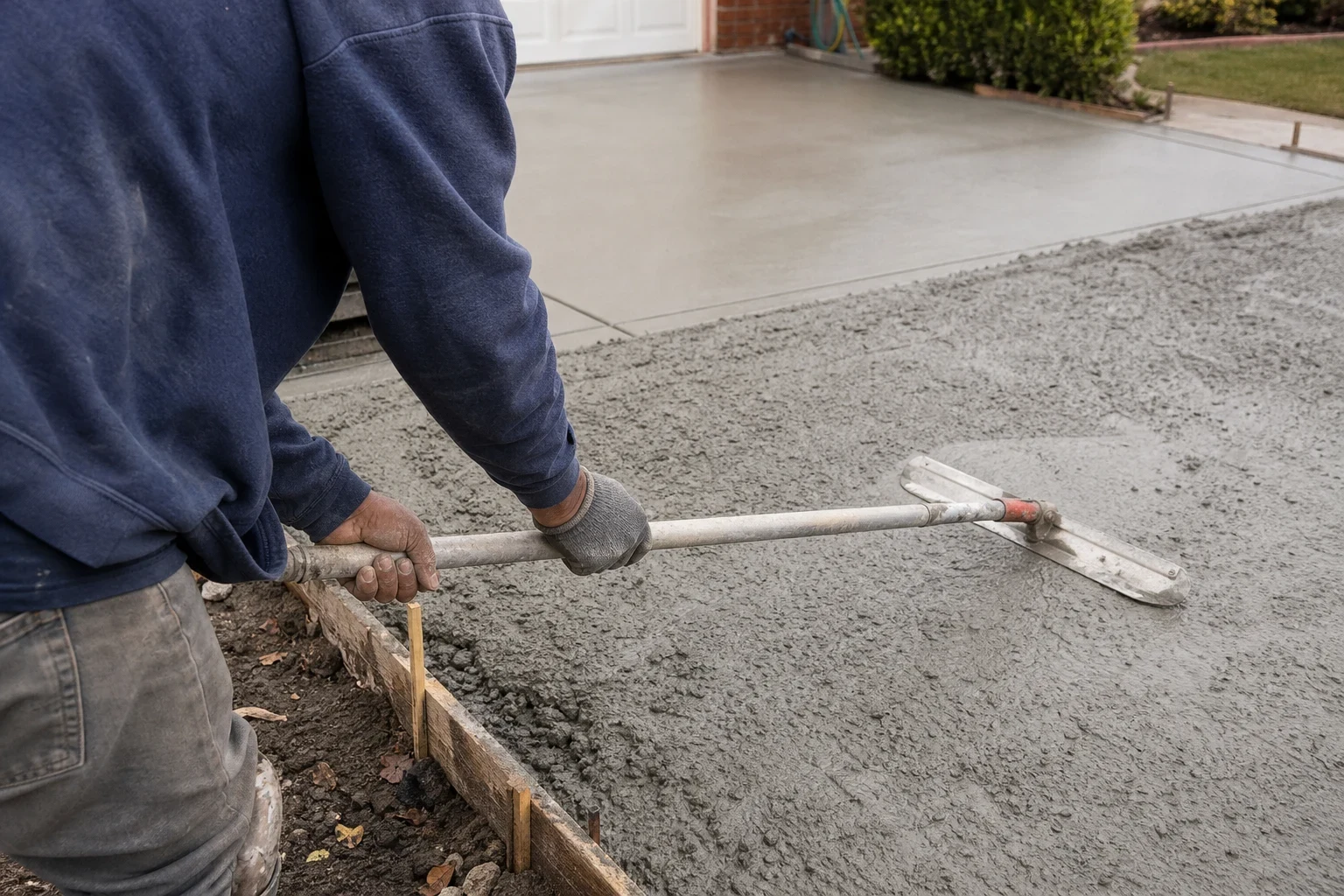
After forms and rebar are checked, the ready-mix truck arrives and we place, screed and finish the concrete in one continuous pour so there are no cold joints.
- 5
Curing and handover
Keep foot traffic off for about a day and vehicles off for at least seven. Concrete reaches its design strength around 28 days, so heavy trucks should wait until then.
What Moves the Price of a Driveway
Every driveway is priced from its measurements and what we find under the old slab. The written estimate lists each line, so you can see where the money goes before work starts.
- Square footage and thickness
- Area drives the amount of concrete, base and steel. A thicker slab for heavier vehicles adds material.
- Demolition and disposal
- Thick or heavily reinforced old concrete takes longer to break and weighs more to haul.
- Soil and root conditions
- Soft clay, buried debris or large roots mean more excavation and base rock to build stable support.
- Access and the street apron
- Tight access may require a concrete pump. Replacing the apron or curb cut adds permit and inspection steps.
- Finish choices
- A broom finish is the baseline. Color, exposed aggregate or a stamped border adds labor and materials.
Driveway Questions
Something not covered here? (714) 617-7914
How thick should a new driveway be?
Most driveways that carry cars and light trucks get four to five inches of concrete over a compacted base. Park a work van or a heavier pickup there and we increase the thickness. Thickness alone doesn't make a driveway last, because the base rock and the steel do just as much of the work.
Will the new driveway crack?
Concrete loses a little volume as it cures, so some cracking is expected in any slab. Control joints give that shrinkage a straight, planned place to happen, and rebar holds the edges of any crack tight together. A good install is about preventing the wide, displaced cracks that come from a poorly built base.
How long until I can use my driveway again?
Removing the old slab, building the base and pouring the new concrete generally runs a few days, longer for a bigger driveway. Once it's poured, give it roughly a week before you park on it. Before work begins, we go over where your cars can sit in the meantime.
Is the job site safe for my kids and pets?
The work zone is fenced or taped off, saw cutting is done wet to keep silica dust down, and our equipment stays parked inside that boundary. Wet concrete is caustic and can burn skin, so keep children and pets away from the slab until it has set and the area has been cleaned up.
Can a tree stay next to the new driveway?
In many cases it can. We trim the roots that run under the slab footprint and can set a root barrier along the driveway edge. If the tree sits too close for both the tree and the slab to do well, we'll say so directly.
Ready for a Driveway Built on a Solid Base
Tell us about your driveway, the cars you park and what bothers you about the current one. We'll set a time to measure and walk you through the next steps.