ServicesConcrete Slabs
Concrete Slabs in Fountain Valley
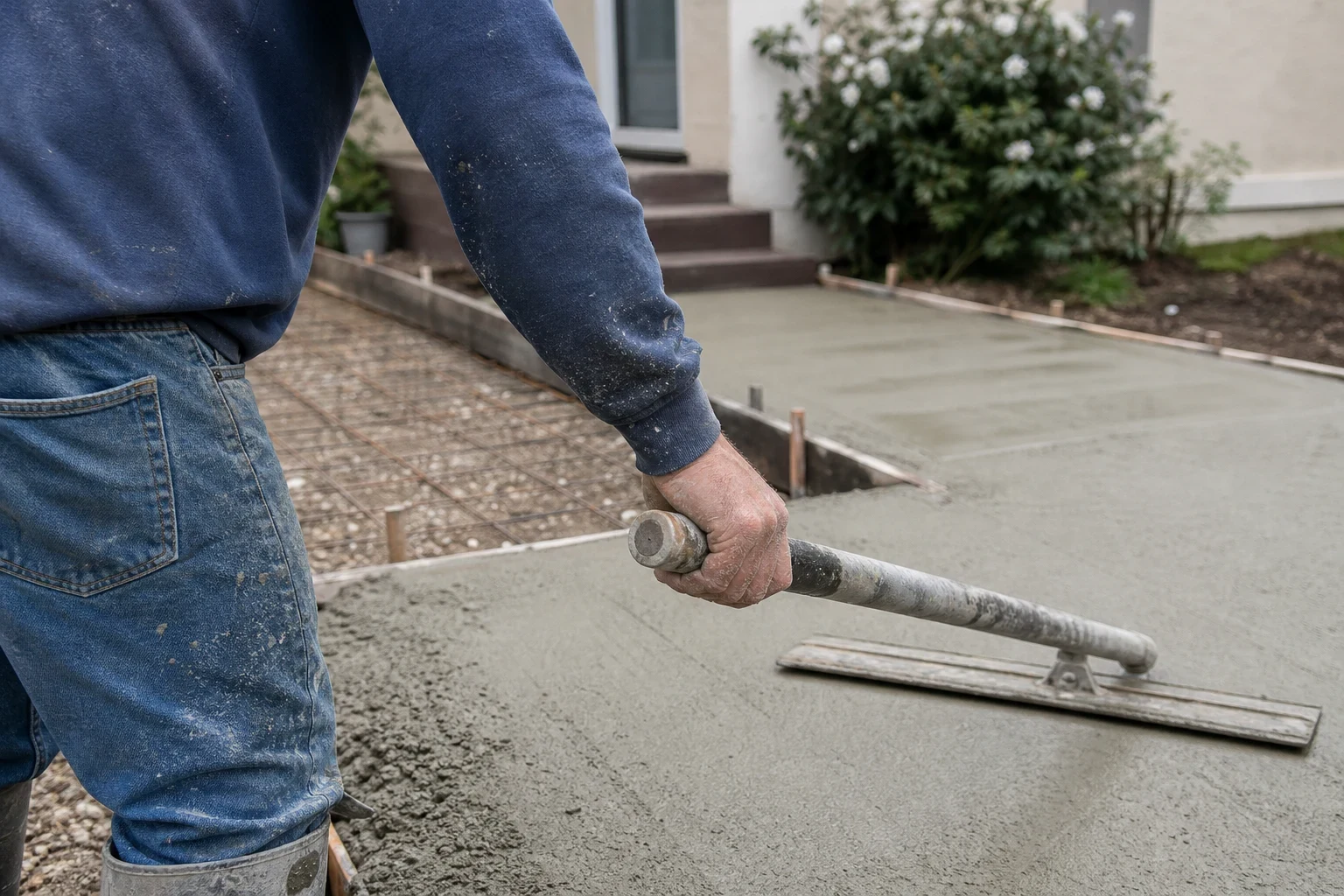
We pour concrete slabs for sheds, hot tubs, AC and pool equipment, trash enclosures and open work areas. Each slab sits on compacted base, carries steel sized for its load and gets control joints placed where cracks would otherwise choose for themselves.
A slab is only as good as what is under it
Most slab failures start below the surface. Loose fill settles, clay swells after a wet winter, or water runs under the edge and washes out support. The concrete then cracks along the weak spot, usually within the first few years. So most of our attention goes into the subgrade and base before any concrete arrives.
We size the slab to its job. A 4-inch slab with rebar on chairs suits a garden shed or a walk-on pad. A hot tub that weighs several thousand pounds when full, or a workshop floor, calls for more thickness, thickened edges and closer steel spacing. We explain why we chose each spec so you can see it is not padding.
Safety runs through the whole job. We locate buried lines before digging, keep the work zone closed to kids and pets, cap exposed rebar and control dust when we cut. You get a flat, solid slab and a yard that was never a hazard while we built it.
What goes into one of our slabs
- 01
Utility locate before excavation
We request a utility mark-out before digging. Gas, irrigation and low-voltage lines often run shallow in a backyard, and a shovel strike is a real hazard.
- 02
Excavation and compacted base
We remove soft soil and organic material, then place crushed aggregate base and compact it in lifts with a plate compactor. Compacting thin layers gets the density a single thick dump never reaches.
- 03
Forms, slope and thickness
Forms are set to grade with a slight fall, typically about a quarter inch per foot away from your home, so rain and hose water drain off instead of pooling against the foundation.
- 04
Steel reinforcement
We tie rebar into a grid and raise it on supports so the steel ends up near mid-depth of the pour. That position is where reinforcement does its work against cracking; bars left resting on the soil add almost nothing.
- 05
Vapor barrier where it matters
Under a shed, workshop or anything that will be enclosed, we lay a vapor barrier to slow ground moisture from wicking up into stored items or flooring.
- 06
Finish, joints and curing
We finish the surface for its use, from a light broom texture for grip to a smoother trowel finish indoors, and tool or saw control joints at planned spacing. Then we keep the slab damp or apply curing compound so it gains strength evenly.
Questions about Concrete Slabs?
Call(714) 617-7914Signs it is time for a new concrete slab
Equipment sitting on pavers or dirt
An AC condenser, pool pump or water heater on shifting pavers can tilt, strain its connections and vibrate loose. A level slab holds it steady.
A hot tub or shed is on the way
Most manufacturers specify a flat, solid base. Ordering the slab first keeps the delivery from waiting on the ground.
An old slab is heaved or broken through
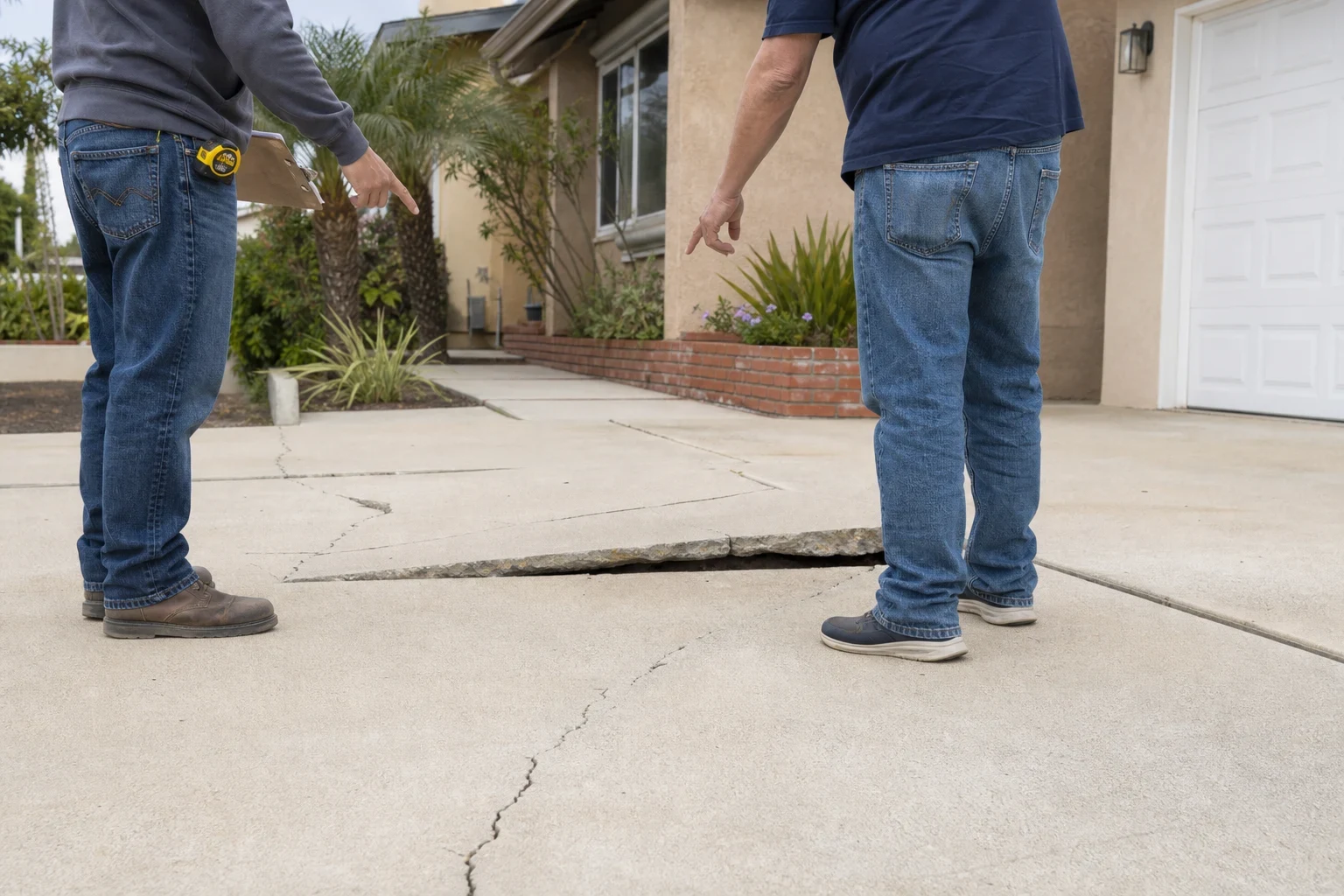
When sections have lifted, sunk or split into pieces, the base underneath has usually failed. Removing the old concrete and pouring new over a proper base is the lasting fix.
Water pools near your foundation
A slab that slopes toward the house sends water at the footing every time it rains. A new slab with correct fall reverses that.
Trip edges and uneven surfaces
Lips of half an inch or more catch toes and wheels. A single continuous slab removes them.
How a slab job runs
- 1
Site visit and spec
We measure the area, check soil and drainage, ask what will sit on the slab and settle thickness, steel and finish. You get a written, line-item estimate.
- 2
Prep day
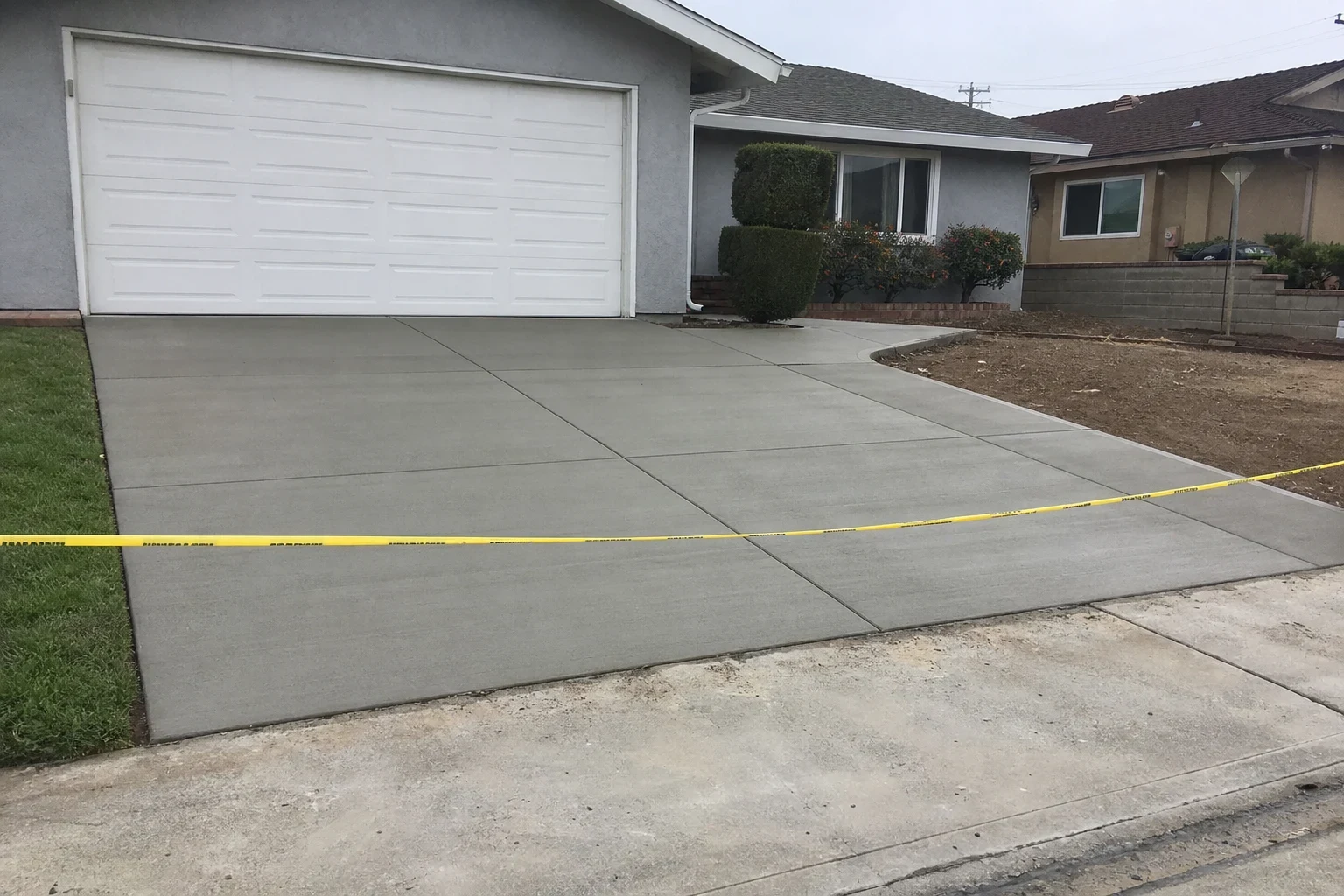
After the locate, we excavate, haul off spoils, compact the base and set forms and rebar. We fence or tape off the area at the end of each day so no one wanders into an open excavation.
- 3
Pour day
The ready-mix truck arrives, we place and screed the concrete, float and finish it, then cut or tool joints. Hoses and wheelbarrow paths are kept clear of walkways your family uses.
- 4
Cure and cleanup
We strip forms, backfill the edges and clean the work area. You can walk on the slab after a day or two; heavy items like a filled hot tub wait about a week, and full strength comes at around 28 days.
What moves the price of a slab
Slab cost comes down to how much concrete and steel the job needs and how hard it is to get material to the spot. We price each line separately so you can see where the money goes. If something changes once we dig, we show you before doing extra work.
- Size and thickness
- Square footage and depth set the volume of concrete. Thickened edges or a 6-inch slab for heavy loads add material and labor.
- Soil and base depth
- Soft or expansive clay needs deeper excavation and more compacted base. That work is hidden later but decides how long the slab lasts.
- Access
- A side yard too narrow for a truck means a concrete pump or wheelbarrows, plus extra protection for fences and landscaping along the route.
- Removal of old concrete
- Breaking out and hauling away an existing slab adds demolition time and disposal fees.
- Permits and finish
- Slabs that support a structure may need a city permit and inspection. A smooth trowel finish or a decorative option like stamped concrete costs more than a broom finish.
Concrete slab questions
How thick should my slab be?
For a shed, AC pad or light foot traffic, 4 inches with rebar is usually right. For a hot tub, a workshop with heavy tools or anything that takes a vehicle, we go thicker and add thickened edges. We decide after hearing what will sit on it and checking the soil.
Will my slab crack?
As fresh concrete loses water it pulls in slightly, and that movement can leave fine surface lines. We cut or tool control joints so the movement follows a straight line we chose, and the rebar keeps any pieces locked together. A well-compacted base and careful curing are what keep those lines thin.
Do I need a permit for a slab?
It depends on what the slab supports and the local rules. A slab under a structure often needs a permit and inspection, while a simple equipment pad may not. We check during the estimate and tell you plainly what applies.
Is it safe for my kids and pets during the job?
We keep the work area marked off, cap exposed rebar and never leave an open excavation unguarded overnight. Wet concrete can burn skin, so we ask that children and pets stay off it until it has set and we give the go-ahead.
I already have a worn-out slab. Can the new one go in the same spot?
It can. Our crew breaks out the existing concrete, hauls the debris away, rebuilds the base and then places the new pour. We don't patch or resurface old slabs, because a fresh start is what gives you sound support underneath and the right drainage slope on top.
Ready to put a solid base under it?
Tell us what the slab will carry and where it goes. We will talk through thickness, steel and access, then set a time to measure.